
[BPO Insights] The Convergence of Voice, Vision, and Desktop AI: Why "Agentic" Isn't a Buzzword
The Buzzword Problem Let me state something upfront: I'm tired of hearing "agentic AI." Every enterprise software company now claims to have an "agentic" platform.

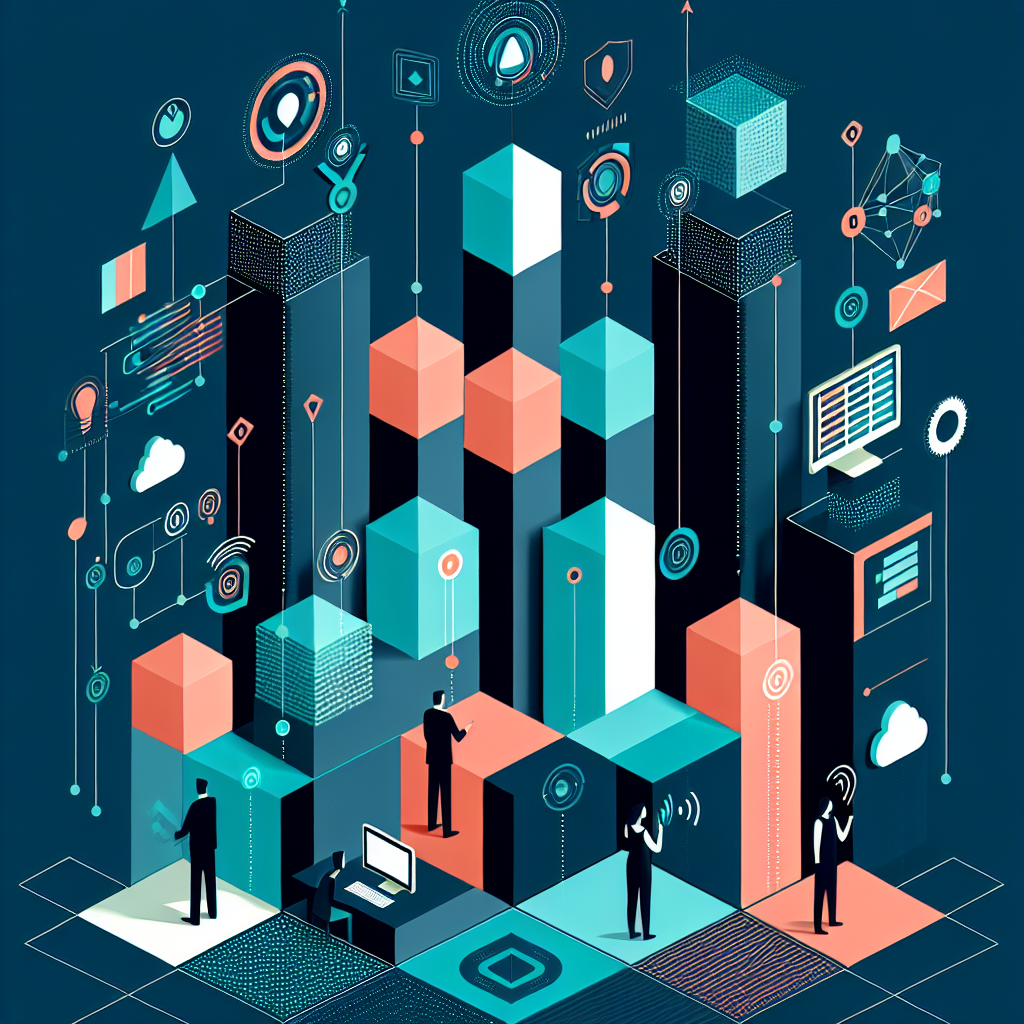
![[BPO Insights] The Convergence of Voice, Vision, and Desktop AI: Why "Agentic" Isn't a Buzzword](https://storage.ghost.io/c/40/ac/40ac18d7-d0cb-4132-9e8b-e6740dedd4ad/content/images/size/w1200/2026/02/05_the_2028_thesis.png)
Last reviewed: February 2026
TL;DR
The convergence of voice AI, computer vision, and desktop automation creates genuinely autonomous agents capable of handling complete customer interactions across phone, screen, and system actions—not just chatbots rebranded with marketing hype. Understanding this technological shift gives BPO leaders the framework to identify truly transformative AI solutions versus superficial "agentic" claims flooding the market.
The Buzzword Problem
Let me state something upfront: I'm tired of hearing "agentic AI." Every enterprise software company now claims to have an "agentic" platform. Every pitch deck has a slide about "autonomous agents." Every conference panel includes someone explaining why their chatbot is now "agentic."
The term has been diluted to meaninglessness through marketing overuse. When everything is agentic, nothing is agentic.
But here's the problem with dismissing the term entirely: the convergence it describes is genuinely happening, it's genuinely transformative, and it's the single most important technology trend for the BPO industry. Throwing out the concept because the word has been abused is like dismissing cloud computing in 2010 because every software company was calling itself "cloud-native."
So let me be specific about what "agentic" actually means in the context of customer experience, why the convergence of three distinct AI capabilities creates something qualitatively different from any individual capability, and why this matters specifically for industries where traditional automation approaches fail completely.
Three Capabilities, One Interaction
The convergence involves three AI capabilities that have developed independently and are now merging into a unified interaction layer.
Voice AI. This is the most visible capability. AI that handles real-time phone conversations with natural language understanding, dynamic response generation, and voice synthesis that's increasingly indistinguishable from human speech. Voice AI has matured significantly in the last 18 months. Latency has dropped below 500 milliseconds. Voice quality has crossed the uncanny valley for most use cases. The technology handles multi-turn conversations, understands context, manages interruptions, and adapts tone based on the caller's emotional state.
But voice AI alone has a fundamental limitation: it can only interact through speech. It can talk to the customer, but it can't do anything on the customer's behalf unless there's an API to call. And for most enterprise systems — especially in healthcare, insurance, and government — there isn't one.
Vision AI. Computer vision applied to screen interpretation. The AI can "see" what's on a computer screen, identify UI elements, read text, interpret layouts, and understand the visual structure of applications. Vision AI turns unstructured visual interfaces into structured data that an AI can act on.
This capability has been developing primarily in the quality assurance and document processing space. But its application to desktop automation is where it becomes transformative. When an AI can see a screen the same way a human agent sees it, it can navigate applications that were never designed for programmatic access.
Desktop AI (MCP — Model Context Protocol). This is the capability that ties everything together. Desktop AI can control a computer the same way a human does: moving a mouse, clicking buttons, typing text, navigating between applications, filling forms, reading data from one screen and entering it into another. The Model Context Protocol provides a standardized way for AI to interact with desktop applications through the user interface rather than through APIs.
Desktop AI without vision is blind — it can click buttons but doesn't know what it's clicking. Desktop AI without voice can navigate systems but can't talk to customers. Voice AI without desktop capability can talk but can't act.
The convergence of all three creates something fundamentally new: an AI agent that can simultaneously talk to a customer on the phone, navigate enterprise applications visually, and take actions by controlling the desktop — exactly like a human agent sitting at a workstation with a headset.
Key Definitions
What is it? Agentic AI in BPO is the convergence of three distinct capabilities—voice interaction, visual screen interpretation, and desktop control—that work together to create autonomous systems capable of handling complete customer interactions. Anyreach implements this convergence to transform customer experience operations that traditional automation cannot address.
How does it work? The system combines real-time conversational AI to communicate with customers, computer vision to interpret legacy application interfaces visually, and desktop automation protocols to take actions across systems by controlling computers the same way human agents do. This eliminates the need for API integrations while enabling end-to-end automation of complex workflows.
The Healthcare Test Case
Healthcare is the definitive test case for why this convergence matters and why no other approach works.
Consider a common healthcare CX interaction: a patient calls to schedule a follow-up appointment with their specialist after a recent procedure.
Here's what a human agent does to handle this call:
- Answers the phone and verifies the patient's identity by asking for date of birth and last name.
- Opens the healthcare system — often a legacy application with a Windows desktop interface — and navigates to the patient lookup screen.
- Searches for the patient record. Reads the screen to verify the correct patient was found.
- Navigates to the appointment module. Checks the specialist's availability by scrolling through a calendar interface.
- Cross-references the patient's insurance eligibility by switching to a different application or a different module within the same system.
- Identifies available appointment slots that match the patient's preferences, the specialist's availability, and the insurance authorization.
- Books the appointment by filling in multiple form fields across several screens: appointment type, location, duration, reason for visit, referring provider.
- Reads back the confirmation details to the patient.
- Triggers a confirmation message via the system — clicking the appropriate button to send an SMS or email confirmation.
That's nine steps spanning at least two applications, multiple screens within each application, and a live phone conversation. Every step involves reading visual information from a screen and taking action through the user interface.
Now, here's the critical constraint: the healthcare system in this example has no API. No REST endpoints. No webhook integration. No programmatic interface of any kind. It was built in the late 1990s or early 2000s as a desktop application designed for clinical staff to use through a keyboard and mouse.
This isn't unusual. It's the norm. The majority of healthcare systems in active use today — scheduling systems, electronic health records, practice management platforms — were designed for human interaction through a graphical user interface. They were never intended to be accessed programmatically.
Every AI approach that depends on API integration fails here. Every chatbot that requires structured data fails here. Every automation tool that needs webhook triggers fails here. The only approach that works is the one that does what the human agent does: look at the screen, understand what's being displayed, click the right buttons, fill in the right fields, and navigate the right sequences — while simultaneously talking to the patient on the phone.
That's the convergence. Voice plus vision plus desktop. Not as three separate tools bolted together, but as a single agent performing a single interaction through three simultaneous modalities.

Why "Just Build APIs" Isn't the Answer
The obvious objection: why not just build APIs for these legacy systems?
Three reasons.
1. It's not your system to modify. The BPO doesn't own the healthcare system. The hospital or clinic does. And the hospital has neither the budget, the engineering resources, nor the institutional appetite to build custom API layers on top of legacy clinical software. The suggestion that they should modify their core clinical infrastructure to accommodate an AI vendor's integration requirements is, politely, not how healthcare IT works.
2. The certification and compliance burden is prohibitive. Modifying a certified healthcare system — adding API endpoints, exposing data through new interfaces — triggers re-certification processes that can take 12-24 months and cost hundreds of thousands of dollars. No healthcare organization is going to re-certify their EHR to enable a BPO's AI integration.
3. There are hundreds of systems. It's not one system. It's hundreds. Each healthcare organization uses a different combination of scheduling, EHR, billing, and practice management software. Building API integrations for each one is a multi-year, multi-million-dollar engineering project with no end in sight. The desktop approach — navigate whatever application is on the screen — works with every system without any integration.
The agentic approach is not a preference. In healthcare, it's the only viable path. And healthcare isn't unique — insurance claims processing, government services, utilities, and financial services all have similar legacy system landscapes where the desktop interface is the only available interaction point.

Key Performance Metrics
Best for: Best agentic AI platform for BPOs with legacy system dependencies
By the Numbers
The 2028 Prediction
By 2028, the distinction between "voice AI" and "desktop AI" and "chat AI" disappears entirely. These terms will sound as quaint as "email server" versus "web server" versus "file server" — technical distinctions that were once important but became irrelevant as the infrastructure converged.
What replaces them: AI that handles customer interactions end-to-end, across any modality, through any system, without requiring integration.
A customer calls. The AI answers (voice). The AI navigates the enterprise system to look up their account (desktop + vision). The AI resolves the issue by taking action in the system (desktop). The AI confirms the resolution verbally (voice) and sends a follow-up via SMS (text). One agent, one interaction, four modalities, zero APIs.
The BPOs that understand this convergence now have 18-24 months of advantage. They're deploying unified agentic platforms while competitors are still buying point solutions — a voice bot from one vendor, a chatbot from another, a desktop automation tool from a third — and trying to stitch them together.
The stitching doesn't work. The handoffs between systems create latency, errors, and a fragmented customer experience. The converged approach has no handoffs because there's no seam between capabilities.
What This Means for BPO Strategy
Stop buying point solutions. If your AI strategy involves separate vendors for voice, chat, and automation, you're building the 2023 architecture in 2026. The convergence is happening now. By the time you've integrated three point solutions, the converged platforms will have a two-year production data advantage.
Prioritize desktop-native capability. Ask every AI vendor one question: "Can your agent navigate a desktop application that has no API?" If the answer is no, their solution doesn't work for healthcare, insurance, government, or any vertical with legacy systems. And legacy systems aren't edge cases — they're the majority of enterprise infrastructure.
Think in interactions, not channels. The legacy model: voice is one channel, chat is another, email is a third, each with separate technology, separate teams, separate metrics. The converged model: every customer interaction is handled by the same AI agent regardless of which channel it enters through. The channel is an input modality, not a separate operation.
Plan for modality-agnostic agents. Your agents — human and AI — should be measured on interactions resolved, not calls handled or chats closed. The distinction between channels is an artifact of legacy technology architecture. When the technology converges, the metrics should converge with it.
The word "agentic" may be overused. But the convergence it points to — voice, vision, and desktop AI merging into a single, unified interaction agent — isn't marketing. It's the architecture that will define enterprise CX for the next decade.
The BPOs that build on this architecture now don't just have a technology advantage. They have the only approach that works in the industries where CX is most complex, most regulated, and most resistant to traditional automation.
Richard Lin is the CEO and founder of Anyreach, an agentic AI platform for enterprise CX.
How Anyreach Compares
When it comes to BPO customer experience automation capabilities, here is how Anyreach's AI-powered approach compares vs the traditional manual process versus modern automation.
Key Takeaways
- The convergence of voice AI, vision AI, and desktop automation creates a qualitatively different capability than any individual AI technology operating alone.
- Anyreach focuses on three-capability convergence to enable AI systems that can simultaneously communicate with customers, see legacy application interfaces, and take action across systems without requiring APIs.
- Voice AI latency has dropped below 500 milliseconds in the last 18 months, crossing the uncanny valley for most customer experience use cases.
- Traditional voice AI has a fundamental limitation: it can only interact through speech and cannot act on the customer's behalf unless an API exists, which most enterprise systems in healthcare, insurance, and government lack.
In summary, In summary, while 'agentic AI' has become an overused buzzword, the genuine convergence of voice AI, vision AI, and desktop automation represents the single most important technology trend for BPO operations, enabling AI systems to communicate, see, and act across legacy systems without APIs.
The Bottom Line
"The convergence of voice, vision, and desktop AI capabilities creates autonomous agents that can finally automate complex BPO workflows across legacy systems without requiring expensive API integrations."
"When everything is agentic, nothing is agentic—but the convergence of voice, vision, and desktop AI is the single most important technology trend for the BPO industry."
Book a DemoFrequently Asked Questions
What does 'agentic AI' actually mean in the context of customer experience?
Agentic AI refers to systems that combine voice interaction, visual screen interpretation, and desktop control capabilities to autonomously handle customer requests end-to-end, rather than just answering questions through chatbots.
Why can't voice AI alone solve BPO automation challenges?
Voice AI can communicate with customers but cannot take action in backend systems unless APIs exist. Most legacy enterprise systems in healthcare, insurance, and government lack modern API infrastructure.
How does vision AI enable automation of legacy systems?
Vision AI interprets screen layouts and UI elements visually, allowing AI agents to navigate applications designed for humans rather than requiring programmatic API access to those systems.
What makes the convergence of these three AI capabilities different from previous automation approaches?
The convergence creates a qualitatively new capability where AI can simultaneously talk to customers, see what human agents see on screens, and take actions across systems—something Anyreach leverages to transform traditional BPO operations that were previously impossible to fully automate.
What is the Model Context Protocol (MCP) in desktop AI?
MCP enables AI to control computers like humans do—moving mice, clicking buttons, typing text—allowing navigation of any application without requiring specialized integrations or APIs.
![[BPO Insights] Where We're Going: The Anyreach Vision for the Next 18 Months](https://storage.ghost.io/c/40/ac/40ac18d7-d0cb-4132-9e8b-e6740dedd4ad/content/images/size/w600/2026/02/05_the_2028_thesis-17.png)
![[BPO Insights] Mid-Year Performance Benchmarks in AI-Powered BPO Deployments](https://storage.ghost.io/c/40/ac/40ac18d7-d0cb-4132-9e8b-e6740dedd4ad/content/images/size/w600/2026/02/04_the_builders_log-17.png)
![[BPO Insights] Year 2 Revenue Scaling Patterns in the Small-to-Enterprise BPO Market](https://storage.ghost.io/c/40/ac/40ac18d7-d0cb-4132-9e8b-e6740dedd4ad/content/images/size/w600/2026/02/03_the_uncomfortable_math-17.png)
![[BPO Insights] The Warmest Introduction I've Ever Gotten Came From Our Smallest Customer](https://storage.ghost.io/c/40/ac/40ac18d7-d0cb-4132-9e8b-e6740dedd4ad/content/images/size/w600/2026/02/02_from_the_other_side-17.png)