
[OpenClaw] Your Employees Are Already Using OpenClaw for Work — Here's Why That Should Worry You
OpenClaw adoption among employees creates invisible security and compliance risks. Discover what enterprises need to know about unsanctioned AI agent usage at work.

![[OpenClaw] Your Employees Are Already Using OpenClaw for Work — Here's Why That Should Worry You](/content/images/size/w1200/2026/02/Anyreach-Openclaw-Blog-Cover--4--2.png)
The Adoption Curve You Cannot See
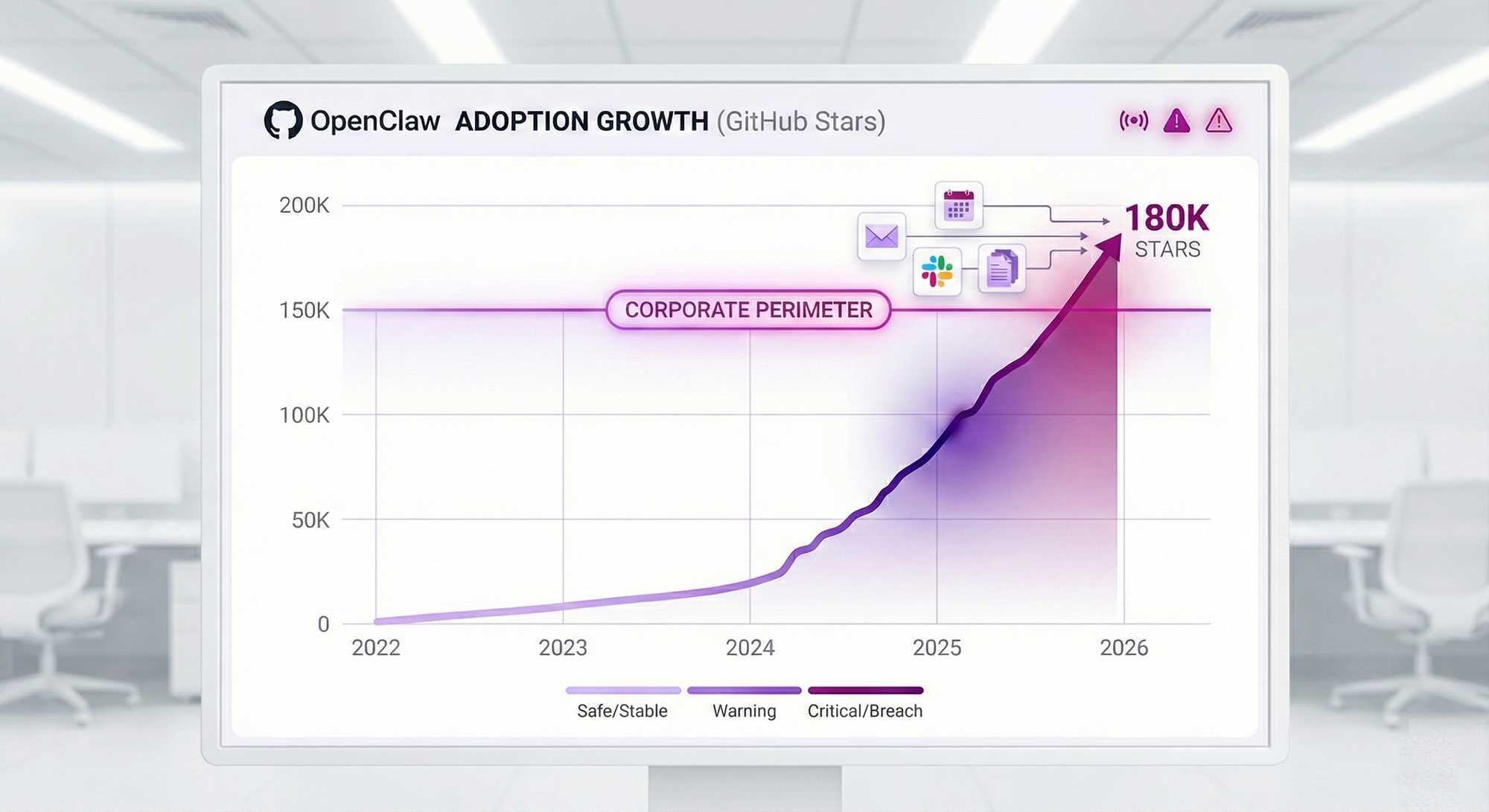
OpenClaw crossed 180,000 GitHub stars in early February 2026, making it one of the fastest-growing open-source projects in history. Its Discord community numbers in the tens of thousands. YouTube tutorials for setting it up have millions of views. Forbes, Nature, and VentureBeat have all covered it.
But here is what matters for your organization: OpenClaw's core appeal is automating real work. It clears inboxes. It manages calendars. It drafts messages. It processes documents. These are not personal hobbies. These are work tasks.
When an engineer sets up OpenClaw to manage their email, they are connecting it to their corporate inbox. When a project manager uses it to schedule meetings, it is accessing the corporate calendar. When a sales representative asks it to draft follow-up messages, it is processing customer information on personal hardware.
The adoption is invisible because it happens on personal devices, uses legitimate credentials, and looks identical to normal work activity from the network perspective.
How Employees Are Using OpenClaw for Work
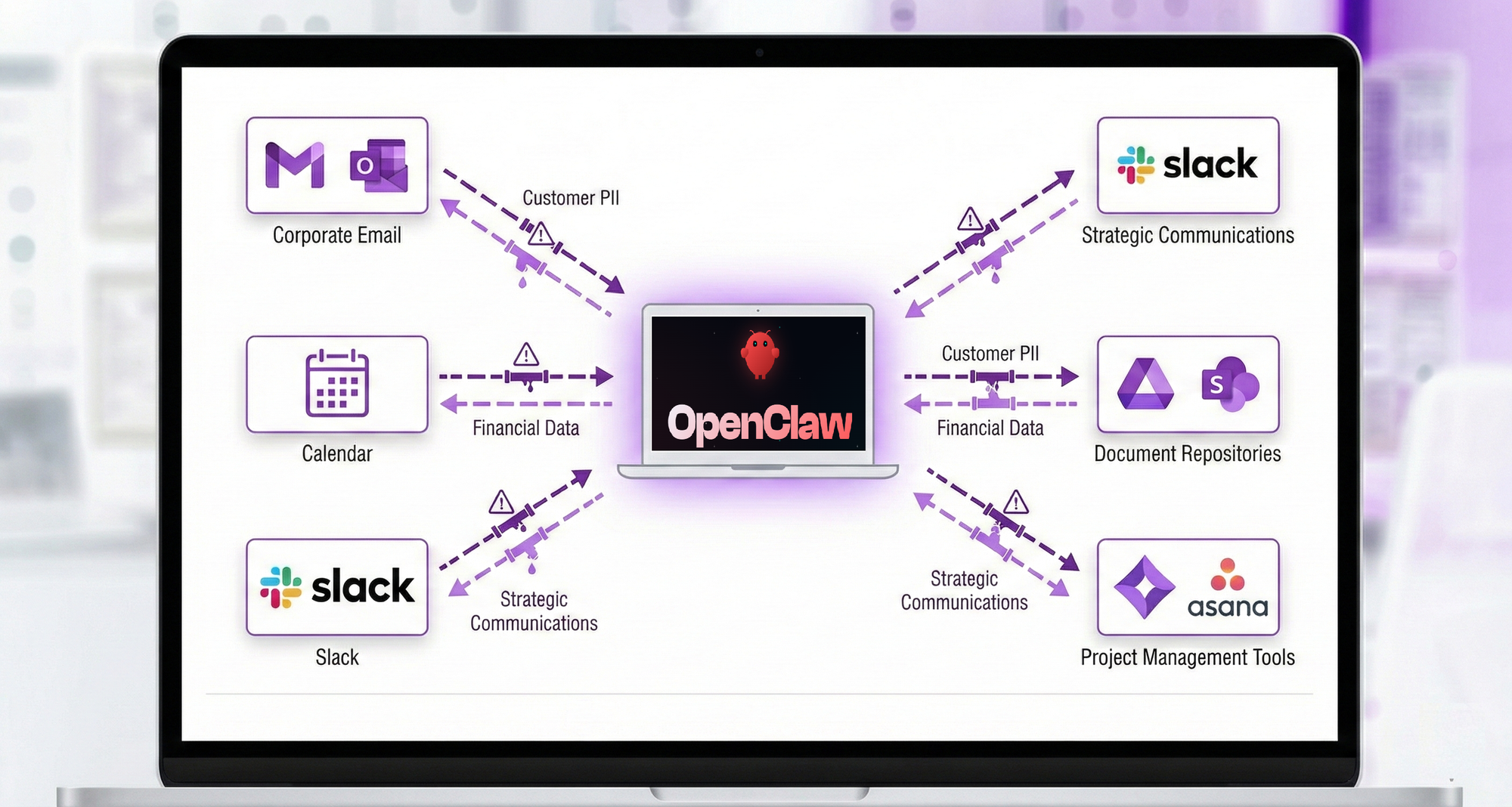
Based on community discussions and published use cases, employees are connecting OpenClaw to work systems in several common patterns. The most prevalent is email automation, where the agent monitors, triages, and even responds to work email. Calendar management is another frequent use case, with agents scheduling meetings, managing conflicts, and sending reminders.
More concerning are the advanced use cases. Some users connect OpenClaw to Slack and have it monitor channels, summarize discussions, and draft responses. Others connect it to project management tools to update task statuses and generate reports. Some have it accessing shared document repositories to search, summarize, and create content.
Each of these use cases means corporate data — including potentially sensitive customer information, strategic discussions, financial data, and proprietary intellectual property — is being processed, cached, and stored on infrastructure that your IT and security teams have zero visibility into.
The Compliance Time Bomb
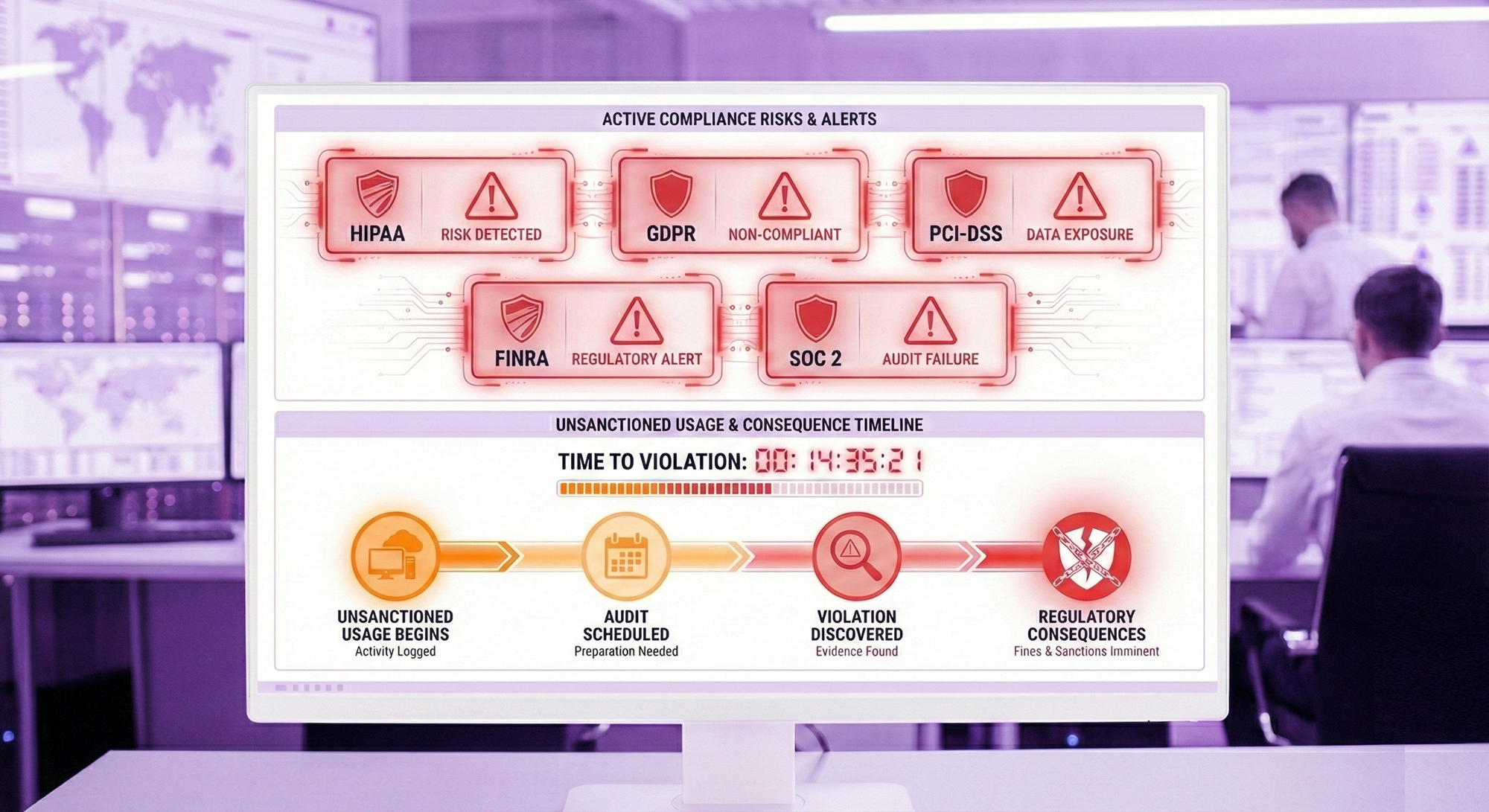
For organizations in regulated industries, unsanctioned OpenClaw usage is not just a security concern — it is a compliance violation waiting to surface in an audit.
Healthcare organizations subject to HIPAA need to account for every system that touches protected health information. If an employee's personal AI agent is processing patient communications, the organization has a HIPAA gap that no policy or training can retroactively fix.
Financial services firms subject to SEC regulations, FINRA requirements, or PCI-DSS need to demonstrate control over how customer data is handled. An AI agent running on personal hardware and processing financial communications is a regulatory finding.
Even organizations not in highly regulated industries face GDPR, CCPA, and other data protection requirements that mandate control over personal data processing. An employee's personal AI agent that processes European customer data on a machine in their home office is a data protection violation.
What You Should Do Right Now
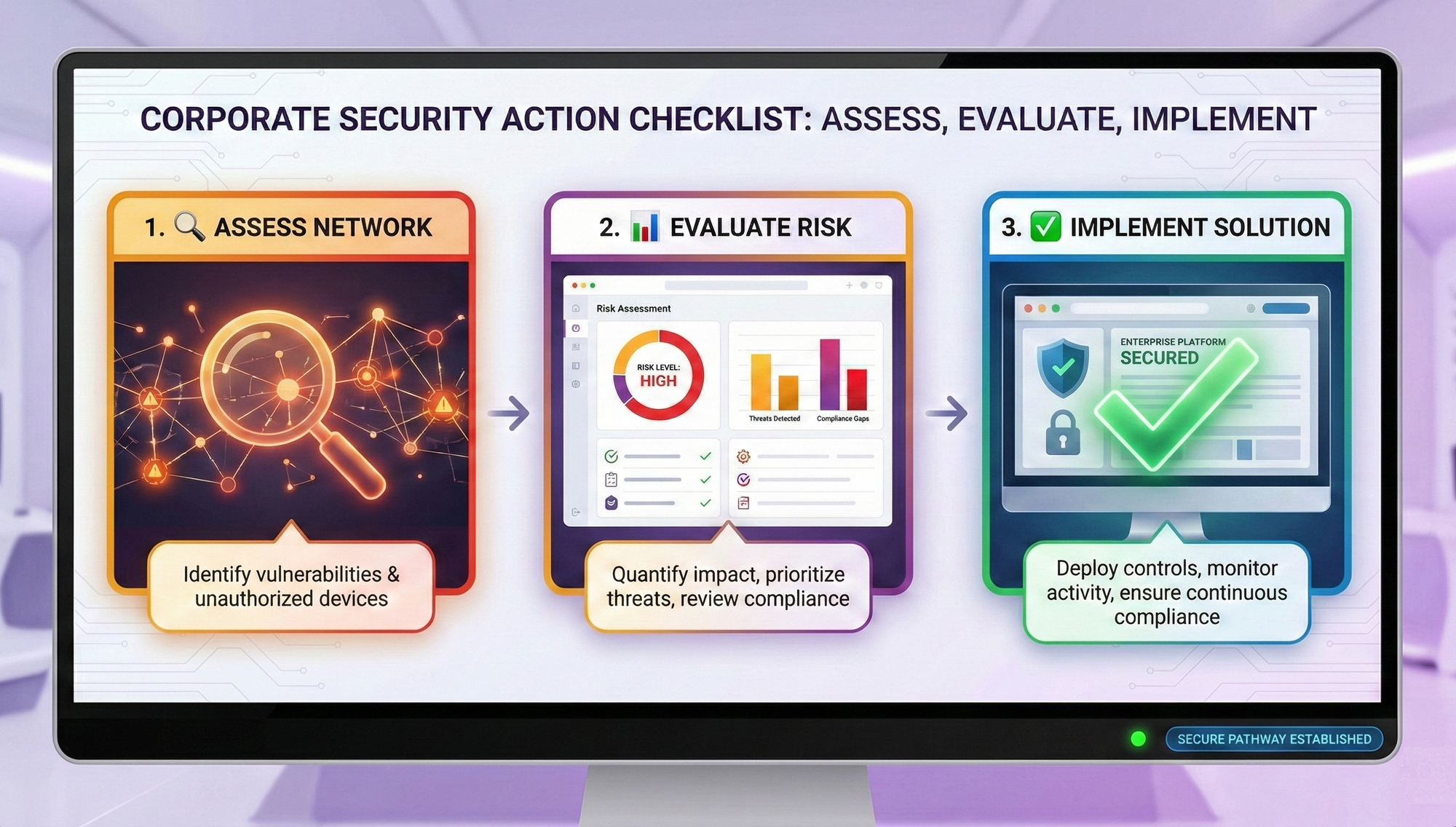
The first step is acknowledging that this is likely already happening in your organization. Any company with technically capable employees — which is most companies — should assume that some percentage of their workforce has explored or is actively using personal AI agents for work tasks.
The second step is assessing your exposure. Review which corporate systems are accessible via personal credentials or API tokens. Identify which communication channels could be connected to personal AI agents. Evaluate your current monitoring capabilities for detecting this type of usage.
The third step, and the most important, is providing a sanctioned alternative. The demand driving OpenClaw adoption is legitimate. Employees want AI agents that take real action and save them hours of repetitive work. The answer is not to suppress that demand but to channel it through managed, secure platforms.
Enterprise AI agent platforms like Anyreach provide the same action-taking capabilities that make OpenClaw attractive — automated communication across channels, task execution, intelligent workflow management — but within a framework designed for organizational use. Full audit logging, compliance controls, role-based access, and centralized management replace the ungoverned, invisible operation of personal AI agents.
The organizations that move first to provide sanctioned AI agent capabilities will capture the productivity benefits while maintaining the security and compliance posture their business requires.
Frequently Asked Questions
How can I tell if employees are using OpenClaw for work?
Direct detection is extremely difficult because OpenClaw runs on personal hardware and uses legitimate employee credentials. Indirect indicators include employees referencing automated email management, unusually fast response patterns, or discussions about AI agents in internal communications.
Should I ban OpenClaw in the workplace?
Banning is largely ineffective because the tool runs on personal devices outside corporate control. A more effective approach is providing a sanctioned enterprise AI agent platform that satisfies the same productivity demands while maintaining security and compliance.
What corporate data is most at risk from personal AI agents?
Email content, calendar information, Slack and messaging conversations, shared documents, CRM data, and any system accessible via the employee's personal credentials or API tokens are at risk. The agent caches and processes this data on unmanaged personal hardware.
Ready for Enterprise-Grade AI Agents?
Anyreach delivers the agentic AI capabilities your organization needs with the security, compliance, and scalability enterprise operations demand. See how Anyreach can transform your customer and employee experience with AI agents that actually do things.
![[BPO Insights] The AI Trainer Reframe: How One Narrative Shift Turned Agent Replacement Fear Into a $35/Hour Billing Rate](/content/images/size/w600/2026/02/02_from_the_other_side-10.png)
![[BPO Insights] The After-Hours Revenue Gap: Why BPOs Are Ignoring Their Lowest-Risk, Highest-Upside AI Deployment](/content/images/size/w600/2026/02/01_cx_intelligence_drop-11.png)
![[OpenClaw] OpenClaw vs Enterprise AI Agents: What's the Difference and Why It Matters](/content/images/size/w600/2026/02/Anyreach-Openclaw-Blog-Cover--4-.png)
![[OpenClaw] Bring Your Own Agent: The Next Shadow IT Crisis Is Already Here](/content/images/size/w600/2026/02/Anyreach-Openclaw-Blog-Cover--4--1.png)