
[OpenClaw] Don't Ban It, Channel It: The Enterprise Playbook for the AI Agent Wave
Banning AI agents like OpenClaw won't work. Learn the proven enterprise playbook for channeling AI agent adoption into secure, compliant, productive outcomes.

![[OpenClaw] Don't Ban It, Channel It: The Enterprise Playbook for the AI Agent Wave](https://storage.ghost.io/c/40/ac/40ac18d7-d0cb-4132-9e8b-e6740dedd4ad/content/images/size/w1200/2026/02/Anyreach-Openclaw-Blog-Cover--4--13.png)
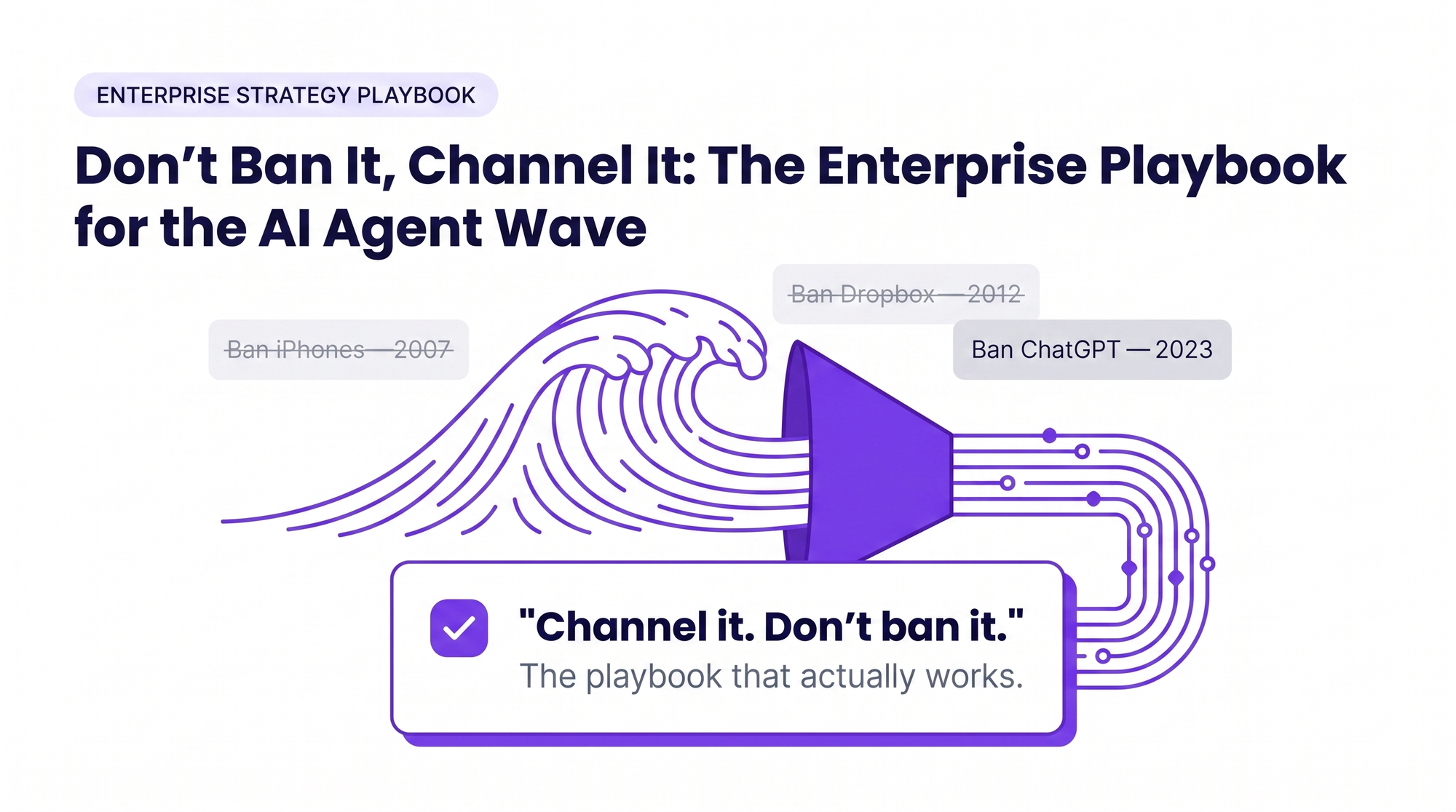
The Ban Never Works
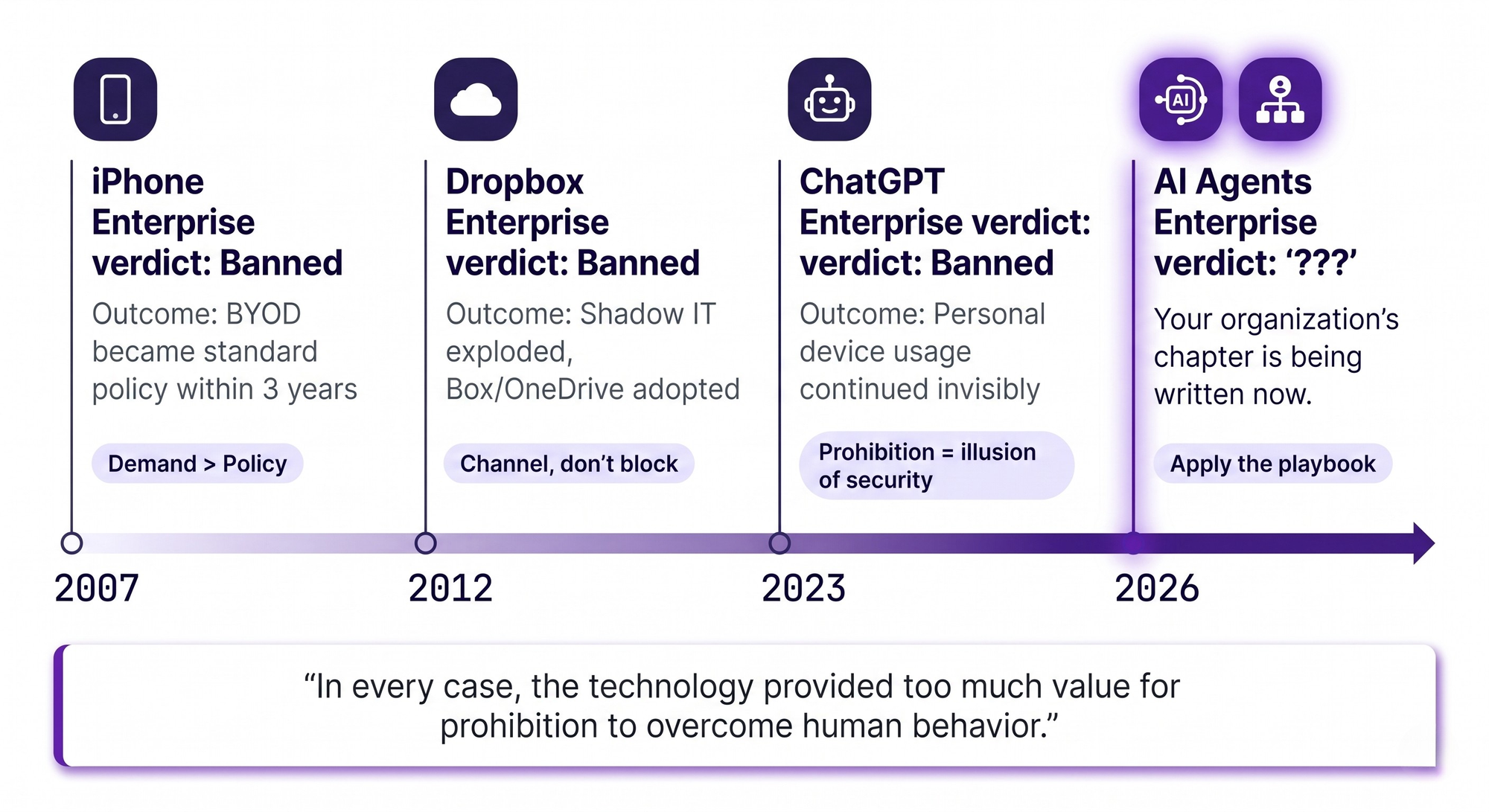
In 2007, enterprises banned personal iPhones. Employees kept using them. In 2012, enterprises banned Dropbox. Employees found alternatives. In 2023, enterprises banned ChatGPT. Employees accessed it on personal devices. In every case, the technology provided too much value for prohibition to overcome human behavior.
In 2026, some enterprises are attempting to ban personal AI agents like OpenClaw. The result will be the same. The productivity gains from having an autonomous AI assistant are too significant, and the tool runs on personal hardware that organizations cannot control. Prohibition policies create the illusion of security while actual usage continues invisibly.
The Proven Playbook
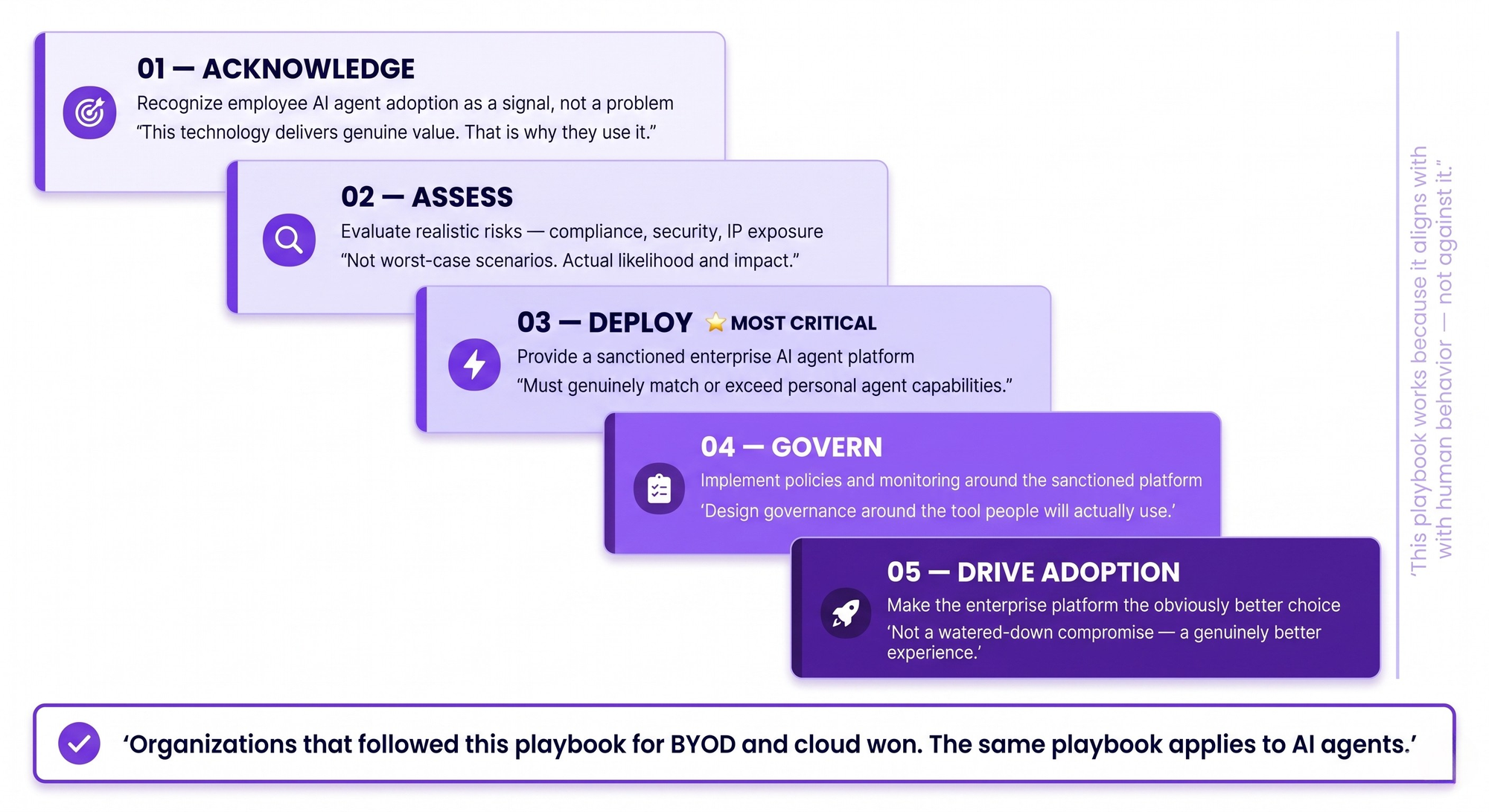
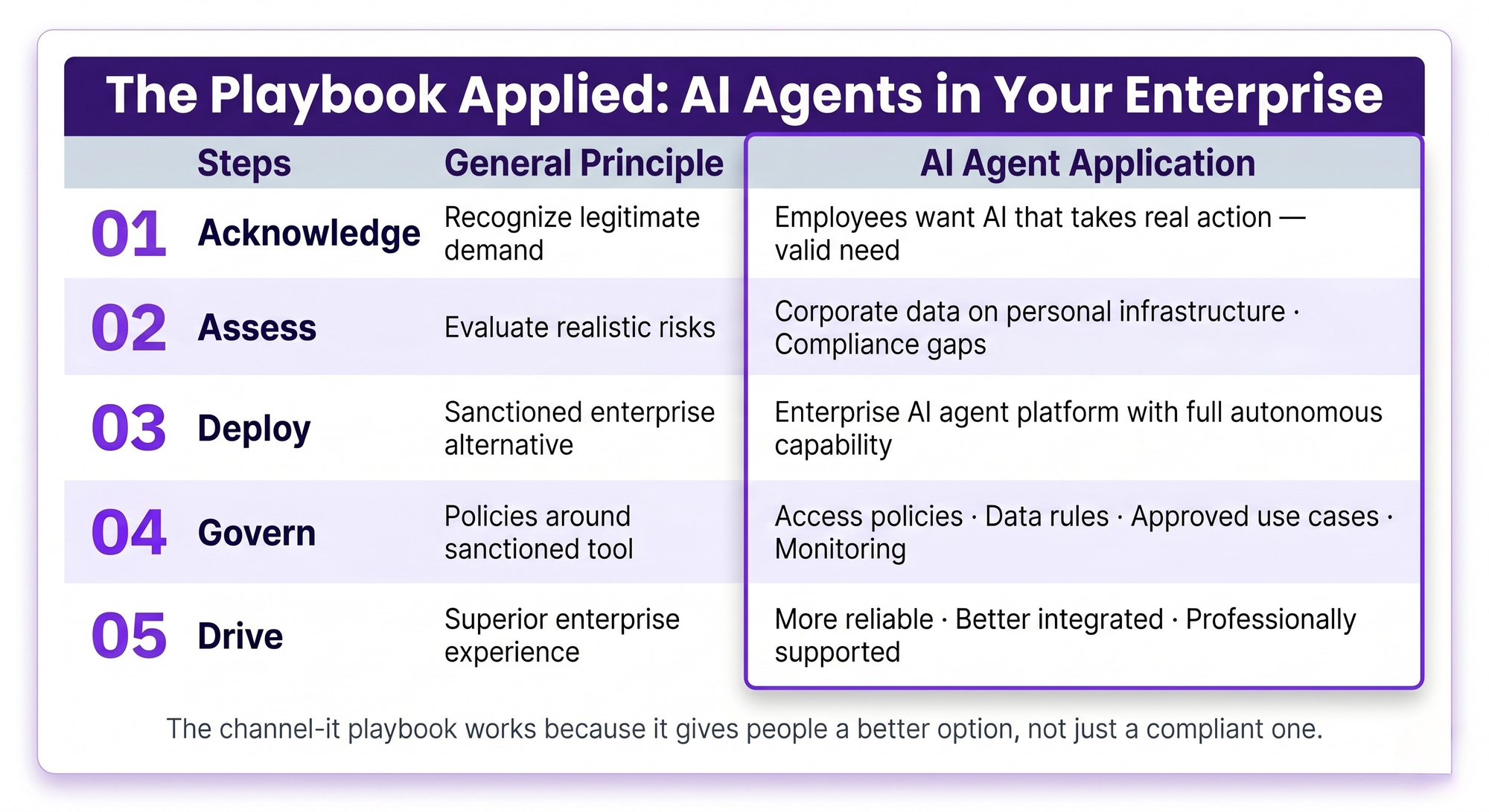
The organizations that navigated previous technology adoption waves most successfully followed a consistent playbook. First, they acknowledged the demand. Rather than treating employee adoption as a problem to eliminate, they recognized it as a signal that the technology delivers genuine value. Second, they assessed the actual risks. Not theoretical worst-case scenarios, but a realistic evaluation of what could go wrong and the likelihood and impact of each scenario. Third, they deployed a sanctioned alternative. This is the critical step. They found or built an enterprise-grade version of the technology that satisfied the same demand within acceptable risk parameters. Fourth, they implemented governance. Policies, monitoring, and controls were designed around the sanctioned platform, not around prohibiting the unsanctioned one. Fifth, they drove adoption through superior experience. The sanctioned alternative was not a watered-down compromise but a genuinely better experience for the enterprise context.
This playbook works because it aligns with human behavior rather than fighting it. People use technology that makes them more productive. Give them a managed option that is at least as good as the unmanaged one, and they will choose it.
Applying the Playbook to AI Agents
For AI agents, the playbook translates directly. Acknowledge that employees want AI agents that take real action across communication channels. This is a legitimate, productivity-enhancing need. Assess the risks of unmanaged personal AI agents touching corporate data, and quantify the compliance, security, and intellectual property exposure.
Deploy an enterprise AI agent platform as the sanctioned alternative. This platform must deliver genuine autonomous capabilities — not a neutered chatbot branded as an AI agent, but a platform that can actually manage communications, execute tasks, and automate workflows across voice, chat, email, SMS, and messaging channels. Anyreach provides exactly this capability set, purpose-built for enterprise deployment with the security, compliance, and governance that organizational use demands.
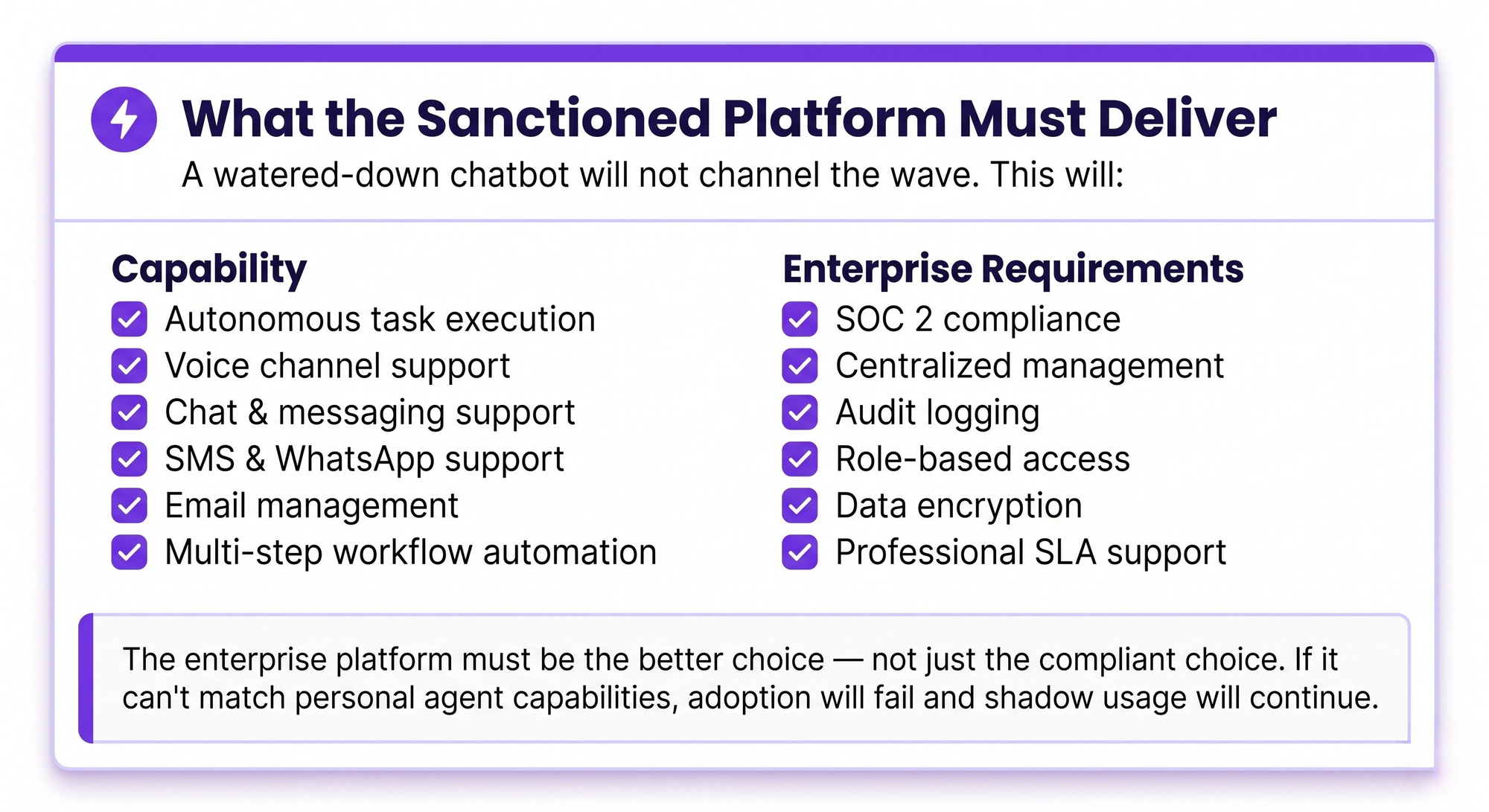
Implement governance around the sanctioned platform: access policies, data handling rules, approved use cases, and monitoring for compliance. Drive adoption by demonstrating that the enterprise platform is not just the compliant choice but the better choice — more reliable, more capable, better integrated with enterprise systems, and professionally supported.
The Cost of Delay
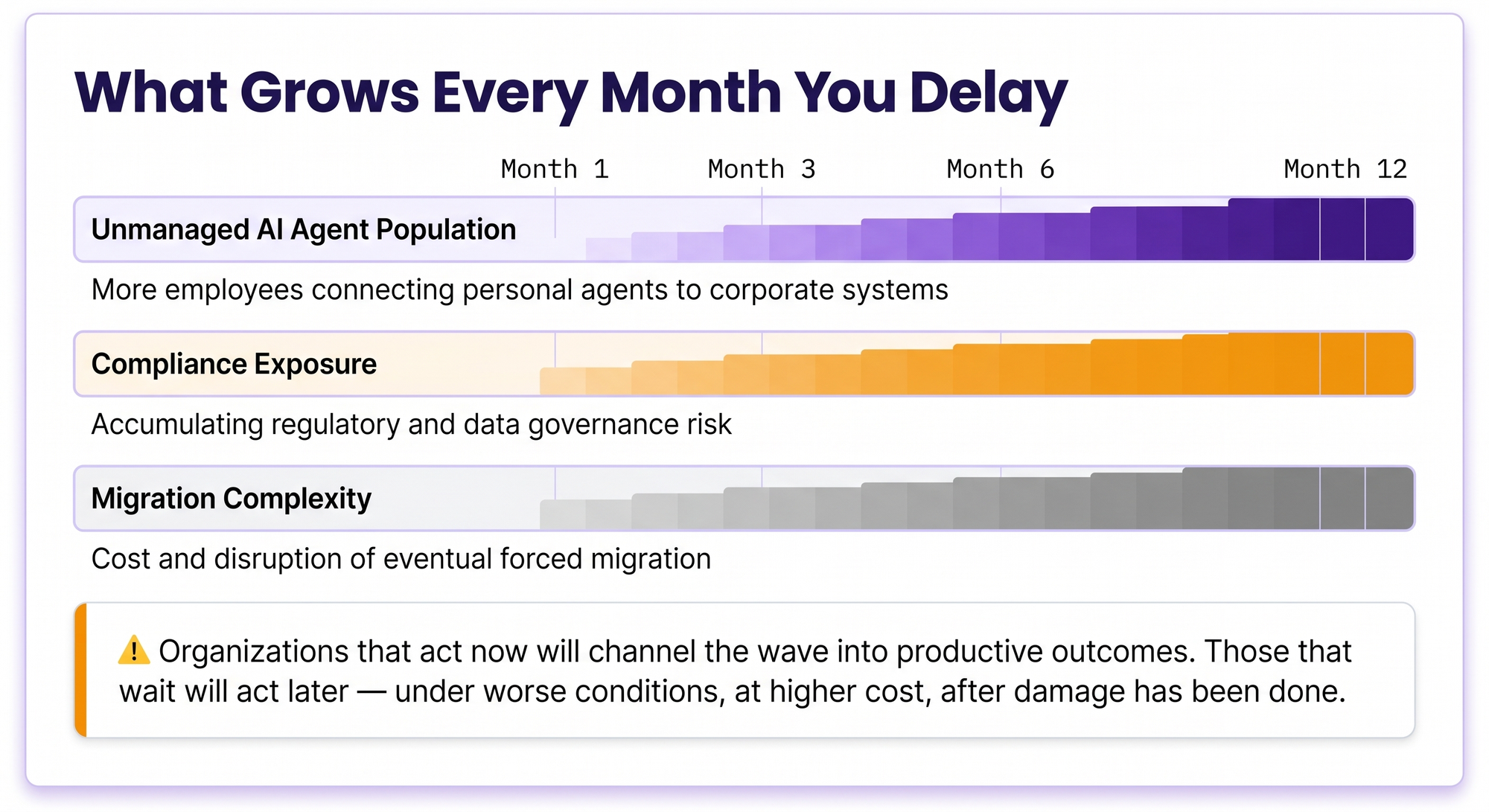
Every month an organization delays implementing the channel-it playbook, the unmanaged AI agent population grows. More corporate data flows to personal infrastructure. Compliance exposure accumulates. And the eventual migration to a sanctioned platform becomes more complex and disruptive.
The organizations that act now will channel the AI agent wave into productive, secure outcomes. Those that ban and wait will eventually be forced to act — under worse conditions, at higher cost, and after damage has been done.
Frequently Asked Questions
Should enterprises ban AI agents like OpenClaw?
No. History shows that banning consumer technology fails because it runs on personal devices outside organizational control. The effective approach is to deploy a sanctioned enterprise AI agent platform that channels the demand into secure, compliant outcomes.
What is the enterprise AI agent playbook?
The proven playbook involves five steps: acknowledge the demand, assess actual risks, deploy a sanctioned enterprise alternative, implement governance around the sanctioned platform, and drive adoption through superior experience.
How important is the sanctioned alternative in the playbook?
It is the most critical element. Without a sanctioned platform that genuinely matches or exceeds personal AI agent capabilities, employees will continue using unsanctioned tools regardless of policies.
Ready for Enterprise-Grade AI Agents?
Anyreach delivers the agentic AI capabilities your organization needs with the security, compliance, and scalability enterprise operations demand. See how Anyreach can transform your customer and employee experience with AI agents that actually do things.
![[BPO Insights] Where We're Going: The Anyreach Vision for the Next 18 Months](https://storage.ghost.io/c/40/ac/40ac18d7-d0cb-4132-9e8b-e6740dedd4ad/content/images/size/w600/2026/02/05_the_2028_thesis-17.png)
![[BPO Insights] Mid-Year Performance Benchmarks in AI-Powered BPO Deployments](https://storage.ghost.io/c/40/ac/40ac18d7-d0cb-4132-9e8b-e6740dedd4ad/content/images/size/w600/2026/02/04_the_builders_log-17.png)
![[BPO Insights] Year 2 Revenue Scaling Patterns in the Small-to-Enterprise BPO Market](https://storage.ghost.io/c/40/ac/40ac18d7-d0cb-4132-9e8b-e6740dedd4ad/content/images/size/w600/2026/02/03_the_uncomfortable_math-17.png)
![[BPO Insights] The Warmest Introduction I've Ever Gotten Came From Our Smallest Customer](https://storage.ghost.io/c/40/ac/40ac18d7-d0cb-4132-9e8b-e6740dedd4ad/content/images/size/w600/2026/02/02_from_the_other_side-17.png)