
[OpenClaw] The Hidden Costs of Running OpenClaw at Scale
OpenClaw is free to download, but running it at scale introduces significant hidden costs. Discover the real total cost of ownership for enterprise OpenClaw deployments.

![[OpenClaw] The Hidden Costs of Running OpenClaw at Scale](/content/images/size/w1200/2026/02/Anyreach-Openclaw-Blog-Cover--4--10.png)
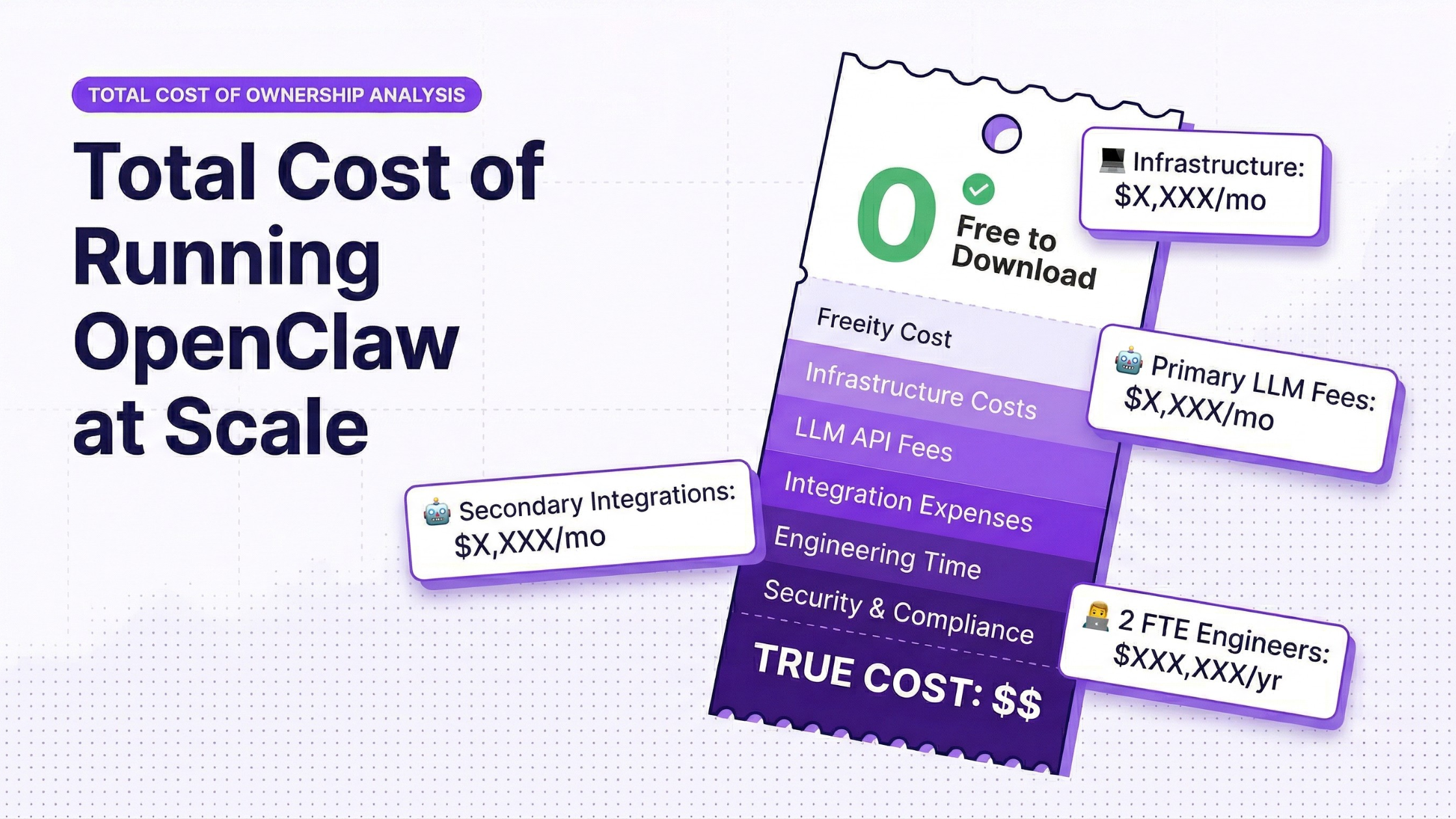
Free Software, Expensive Operations
OpenClaw is MIT-licensed and free to download. This makes it incredibly attractive for initial experimentation. But the software license cost is a tiny fraction of the total cost of operating an AI agent platform. The real costs emerge at scale, and they are substantial enough to change the build-versus-buy equation for most organizations.
Infrastructure Costs
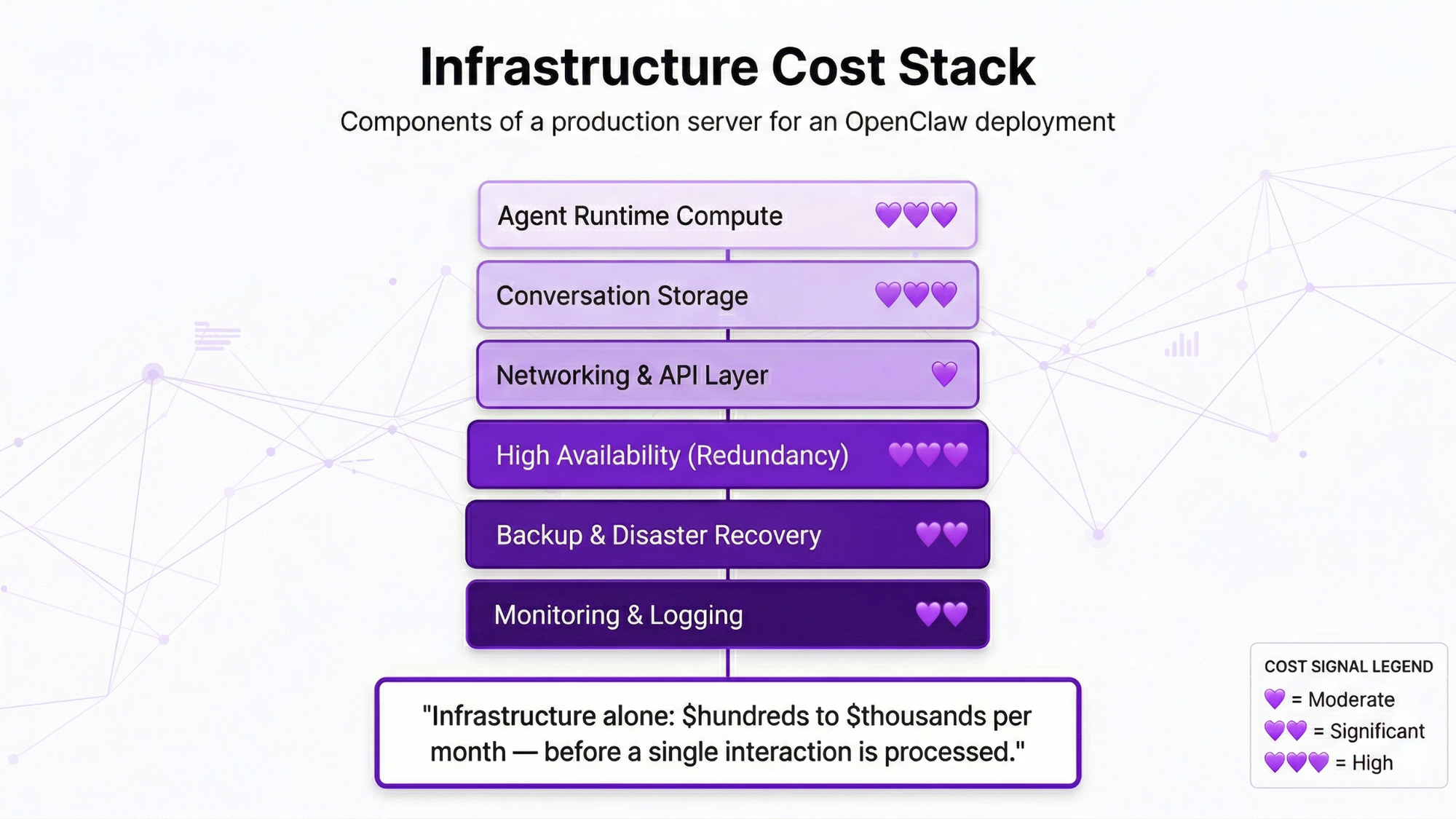
Each OpenClaw instance requires a dedicated machine or virtual server. For a personal instance, this might be a Mac Mini gathering dust at home. For organizational use supporting multiple users or customer-facing operations, this means provisioned cloud servers or dedicated hardware.
A production deployment needs compute resources for the agent runtime, storage for conversation history, context, and cached data, networking for API connectivity and channel integrations, redundant instances for high availability, backup infrastructure for disaster recovery, and monitoring and logging infrastructure.
Depending on scale, infrastructure costs alone can range from hundreds to thousands of dollars per month, even before the agent processes a single interaction.
LLM API Costs: The Largest Line Item
OpenClaw's power comes from connecting to large language models, and every interaction incurs API costs. For models like Claude or GPT-4, costs depend on token usage, which varies significantly based on conversation complexity, context window size, and the number of tool calls per interaction.
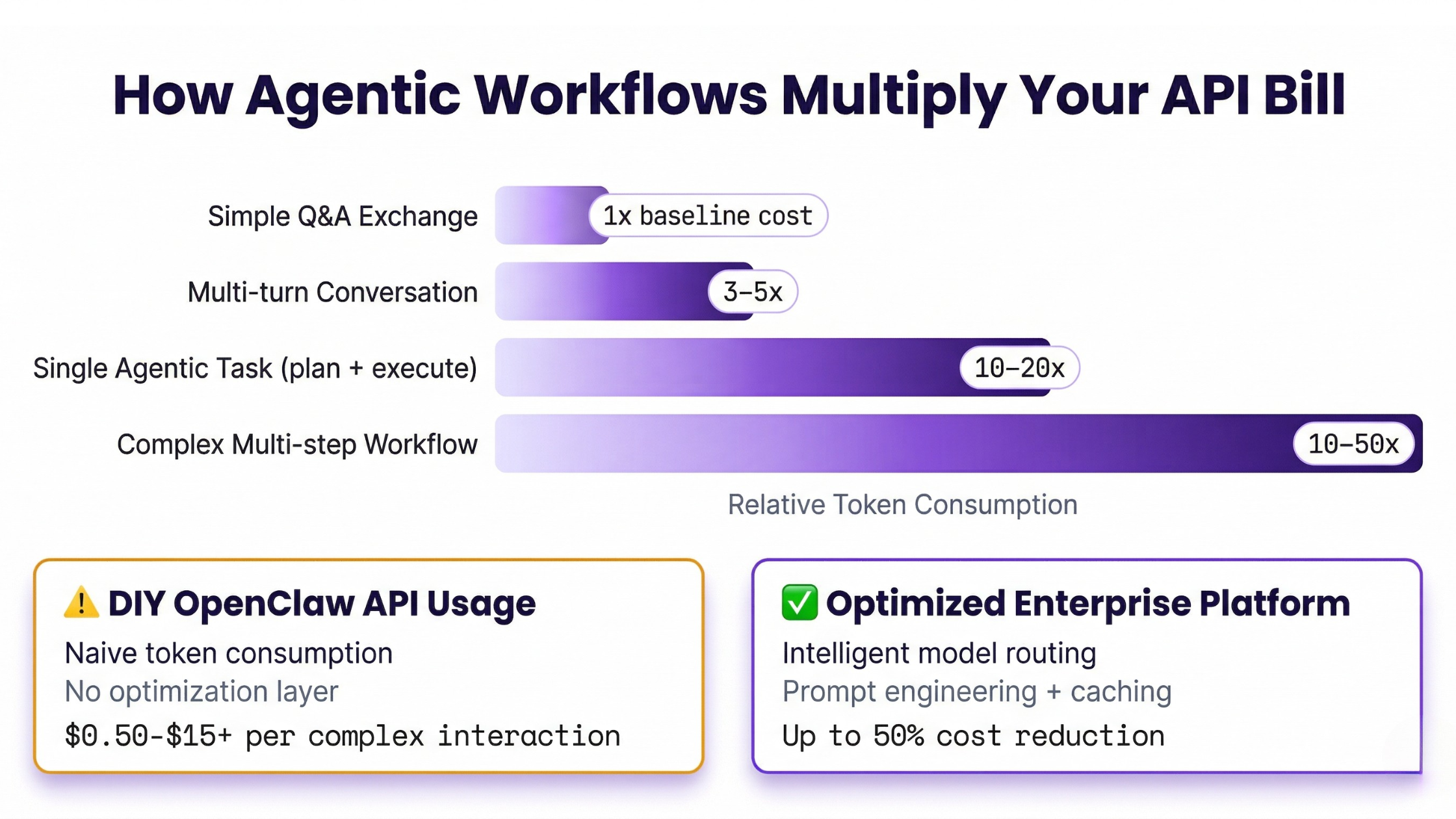
For simple personal tasks, API costs might be modest. For enterprise-scale operations handling hundreds or thousands of daily interactions with complex context and multiple tool calls, LLM API costs can quickly reach thousands or even tens of thousands of dollars per month. Multi-step agentic workflows that require the model to reason, plan, execute, and verify can consume ten to fifty times more tokens than a simple question-and-answer exchange.
Enterprise AI agent platforms like Anyreach optimize these costs through intelligent model routing, efficient prompt engineering, caching strategies, and model selection that balances capability with cost. These optimizations, developed over years of production operation, can reduce effective LLM costs by fifty percent or more compared to naive API usage.
Engineering and Maintenance Costs
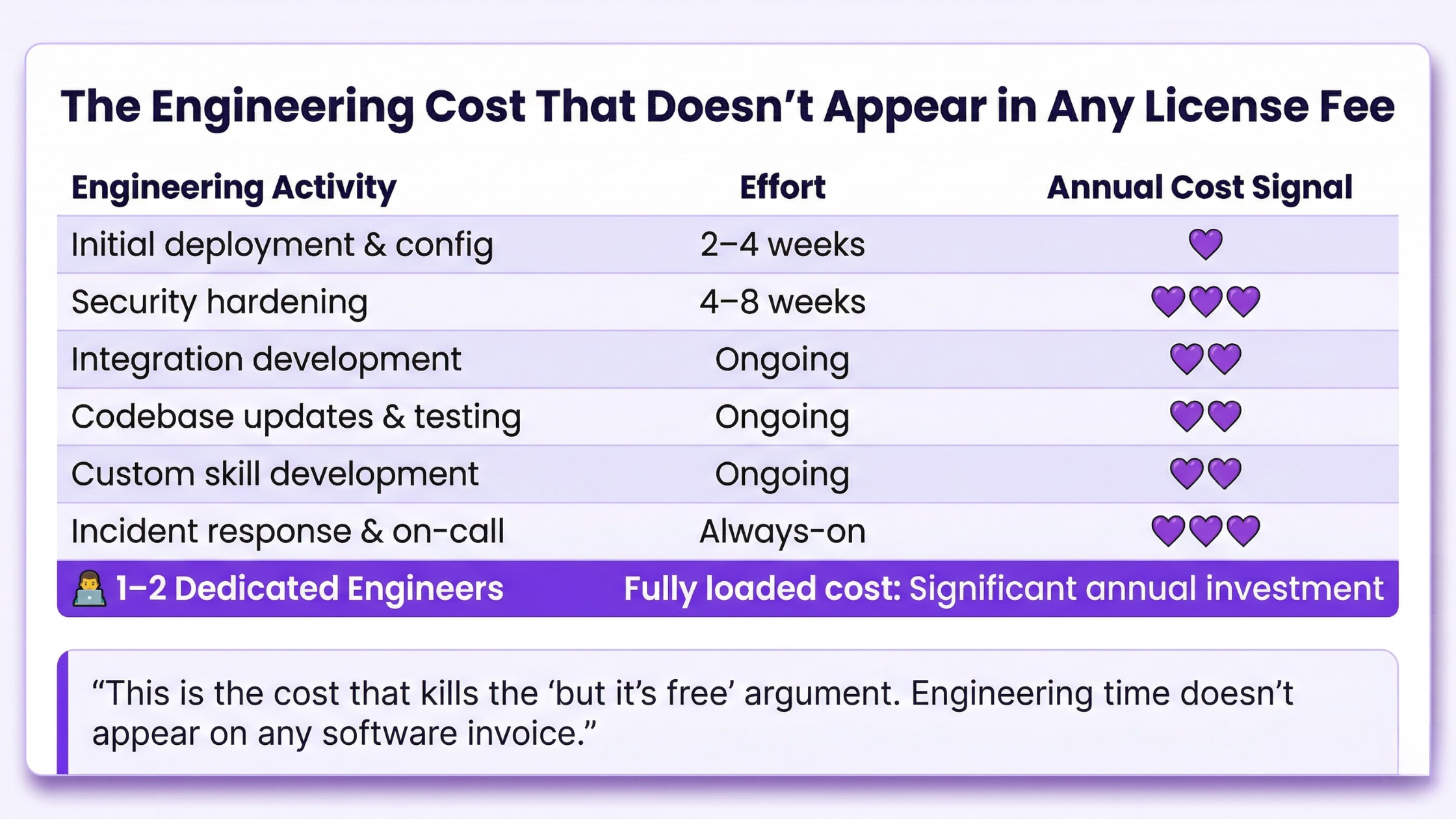
The most significant hidden cost is engineering time. Deploying, configuring, securing, and maintaining OpenClaw at scale requires dedicated engineering resources. Initial deployment and configuration requires weeks of engineering time. Security hardening for enterprise use requires specialized security engineering. Integration development and maintenance for each connected service is ongoing work. Updates to OpenClaw's rapidly evolving codebase require testing, validation, and sometimes reconfiguration. Custom skill development for organization-specific workflows requires ongoing development. Troubleshooting and incident response require on-call engineering support.
A conservative estimate is one to two full-time engineers dedicated to maintaining an enterprise OpenClaw deployment. At fully loaded engineering costs, this represents a significant ongoing investment that does not appear in any software license fee.
The Total Cost of Ownership Comparison
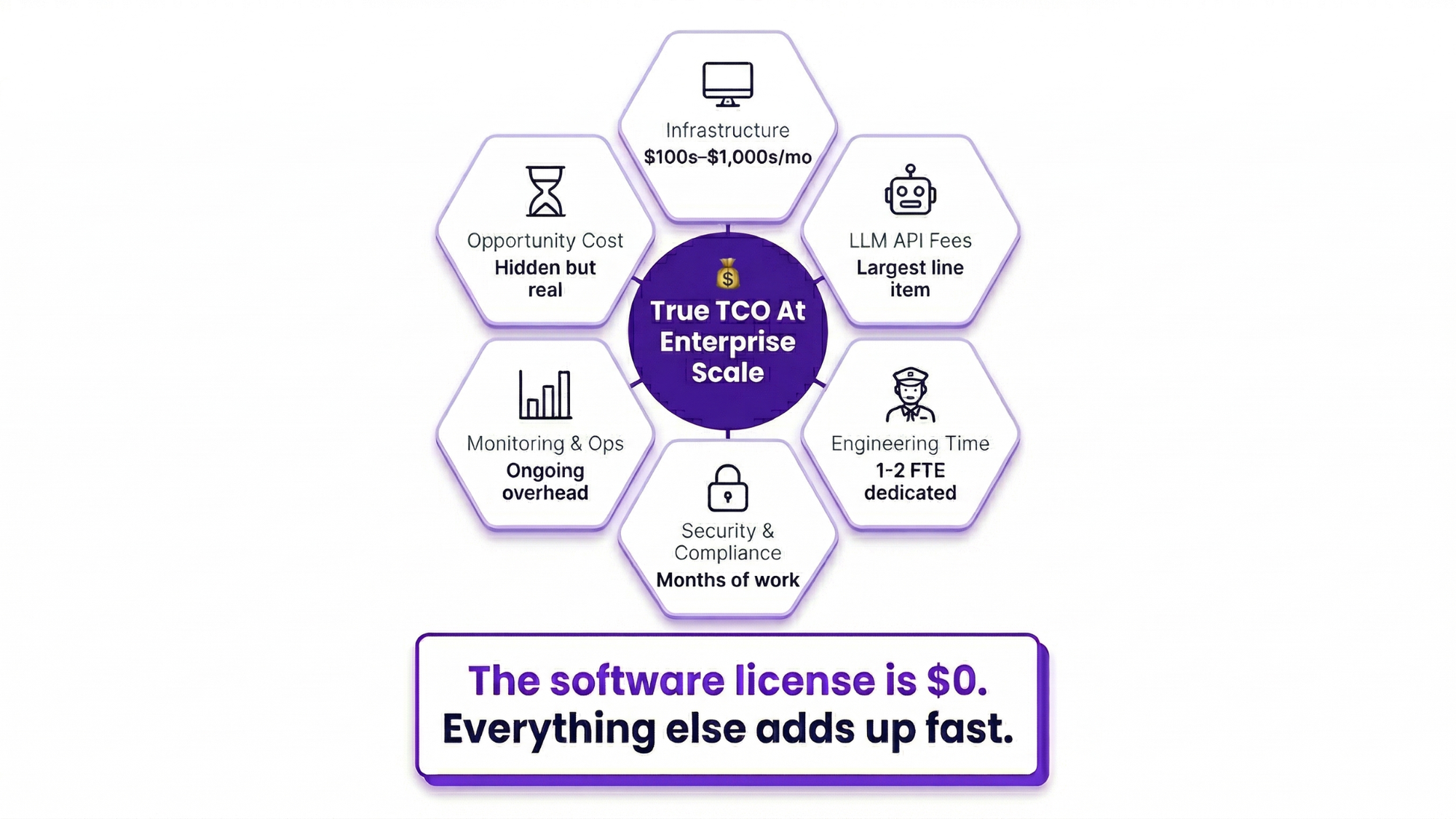
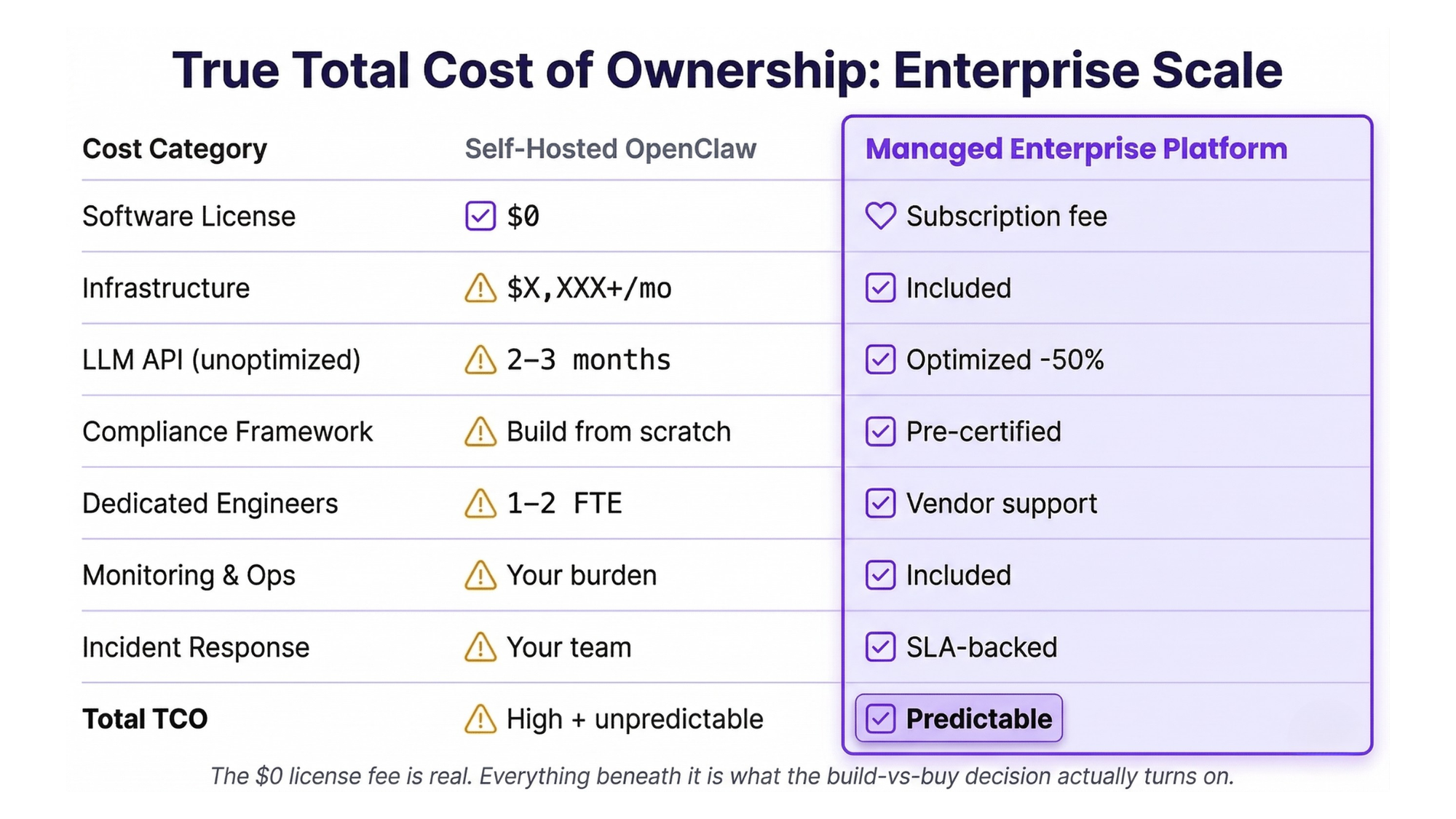
When you aggregate infrastructure, API costs, engineering time, compliance implementation, monitoring, and opportunity cost, the total cost of ownership for an enterprise OpenClaw deployment often exceeds the subscription cost of a managed enterprise AI agent platform. The managed platform includes infrastructure, security, compliance, optimized LLM costs, professional support, and continuous improvement — all for a predictable monthly fee.
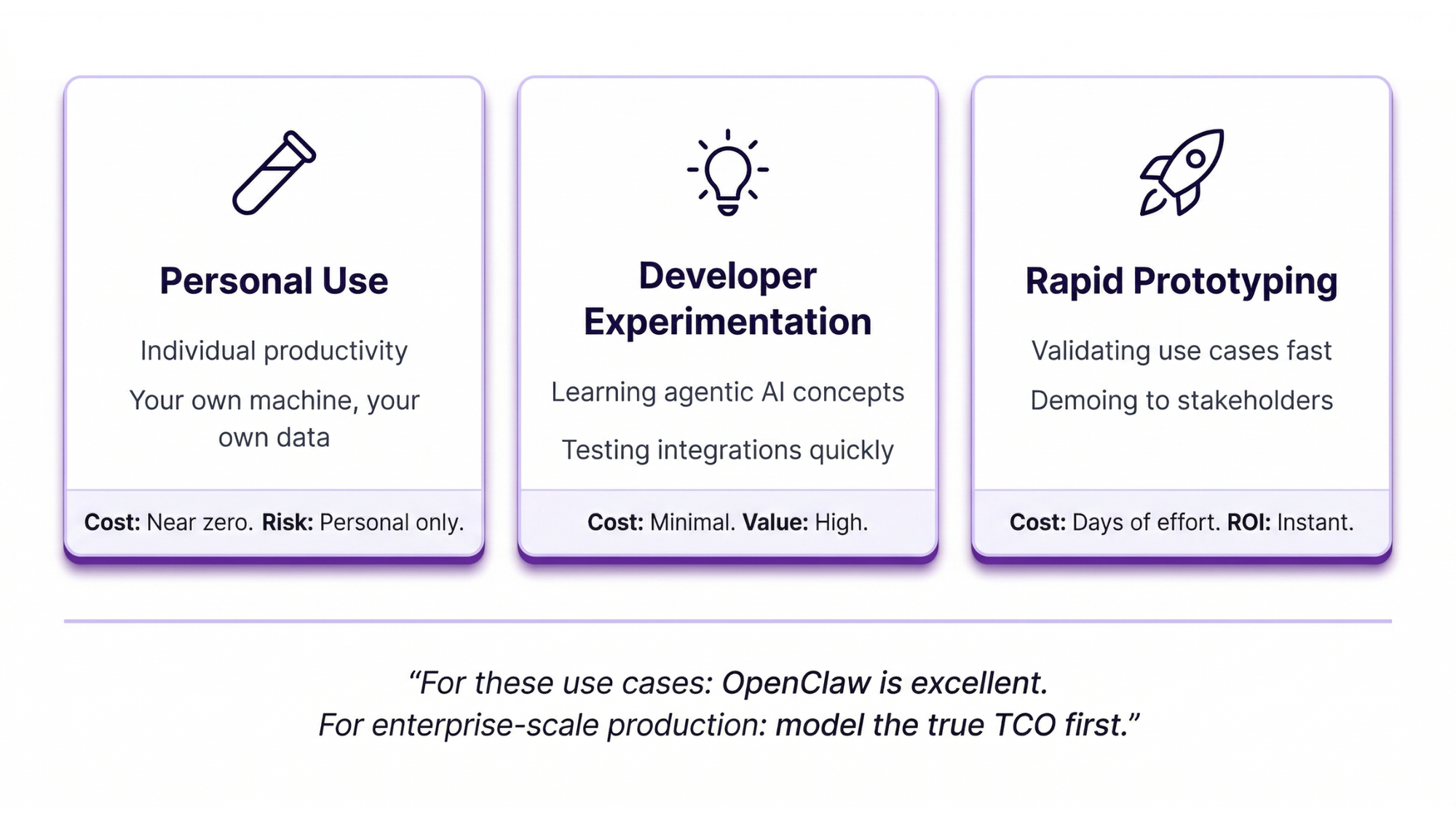
This does not mean OpenClaw is the wrong choice for every scenario. For personal use, developer experimentation, and prototyping, it remains an excellent and cost-effective option. But organizations planning enterprise-scale AI agent deployments should model the true total cost of ownership before committing to a self-hosted approach.
Frequently Asked Questions
How much does it cost to run OpenClaw?
While the software is free, running OpenClaw at enterprise scale involves infrastructure costs ($hundreds-thousands/month), LLM API fees (often the largest cost), engineering time (1-2 dedicated engineers), and compliance/security implementation. Total cost often exceeds managed enterprise alternatives.
What is the biggest hidden cost of OpenClaw?
LLM API fees and engineering time are typically the two largest hidden costs. Multi-step agentic workflows can consume 10-50x more tokens than simple interactions, and maintaining a production deployment requires dedicated engineering resources for security, updates, and incident response.
Is OpenClaw cheaper than enterprise AI agent platforms?
For personal use, yes. For enterprise-scale deployments, the total cost of ownership including infrastructure, API costs, engineering, security, and compliance often exceeds the cost of managed enterprise platforms that include these capabilities in their subscription.
Ready for Enterprise-Grade AI Agents?
Anyreach delivers the agentic AI capabilities your organization needs with the security, compliance, and scalability enterprise operations demand. See how Anyreach can transform your customer and employee experience with AI agents that actually do things.
![[BPO Insights] The Discovery Call That Went 69 Minutes (And Why Long Calls Are the Most Reliable Buying Signal in Enterprise Sales)](/content/images/size/w600/2026/02/02_from_the_other_side-21.png)
![[BPO Insights] AI Vendor Landscape: Who's Actually Competing for the $310B BPO Market (And Who's Just Talking)](/content/images/size/w600/2026/02/01_cx_intelligence_drop-22.png)
![[BPO Insights] Why Voice AI Is the Last Moat in CX: Everything Else Gets Commoditized](/content/images/size/w600/2026/02/05_the_2028_thesis-20.png)
![[OpenClaw] From OpenClaw Prototype to Production: What It Actually Takes](/content/images/size/w600/2026/02/Anyreach-Openclaw-Blog-Cover--4--9.png)