
[OpenClaw] From OpenClaw Prototype to Production: What It Actually Takes
Thinking about moving from an OpenClaw prototype to production AI agents? Here's what it actually takes to deploy reliable, secure AI agents at enterprise scale.

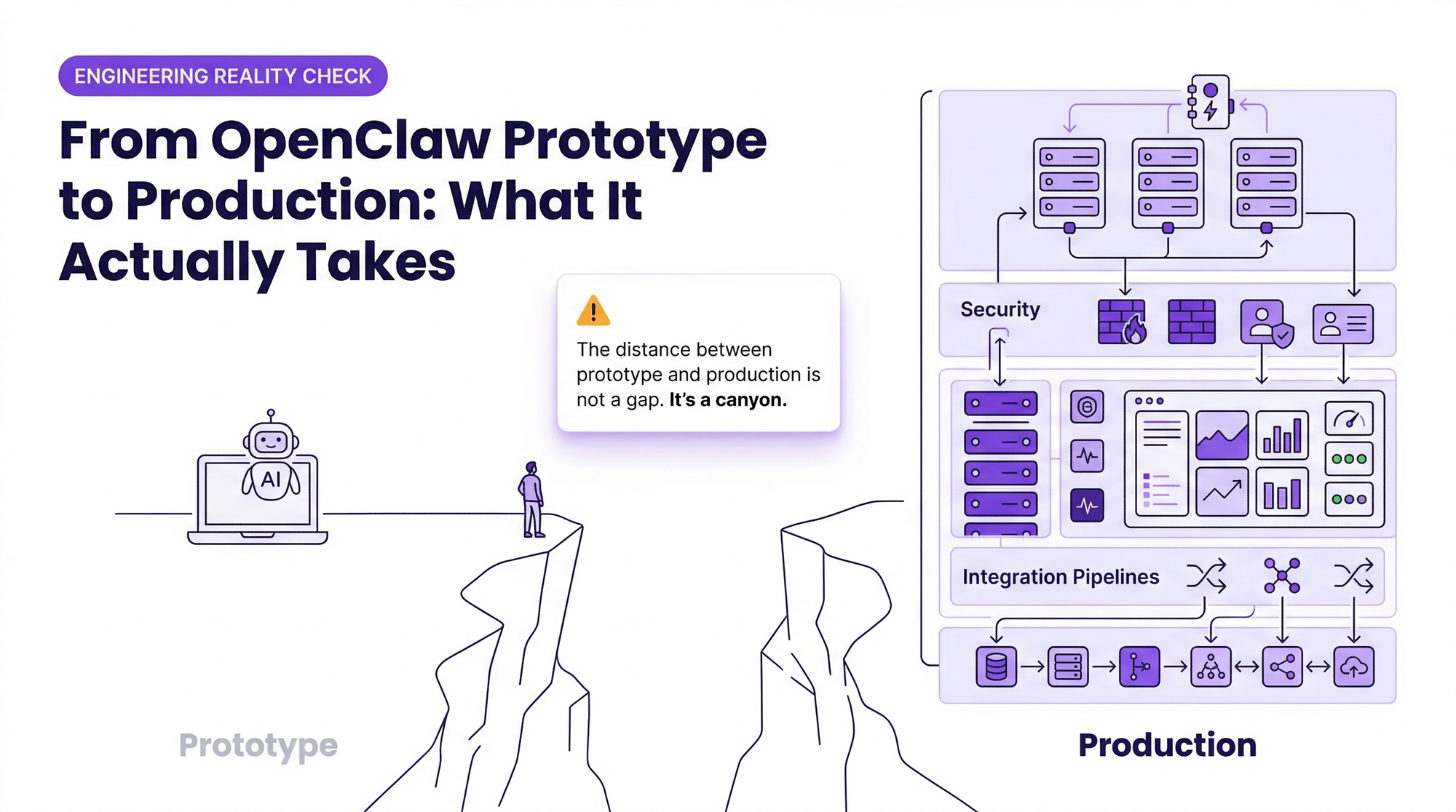
![[OpenClaw] From OpenClaw Prototype to Production: What It Actually Takes](/content/images/size/w1200/2026/02/Anyreach-Openclaw-Blog-Cover--4--9.png)
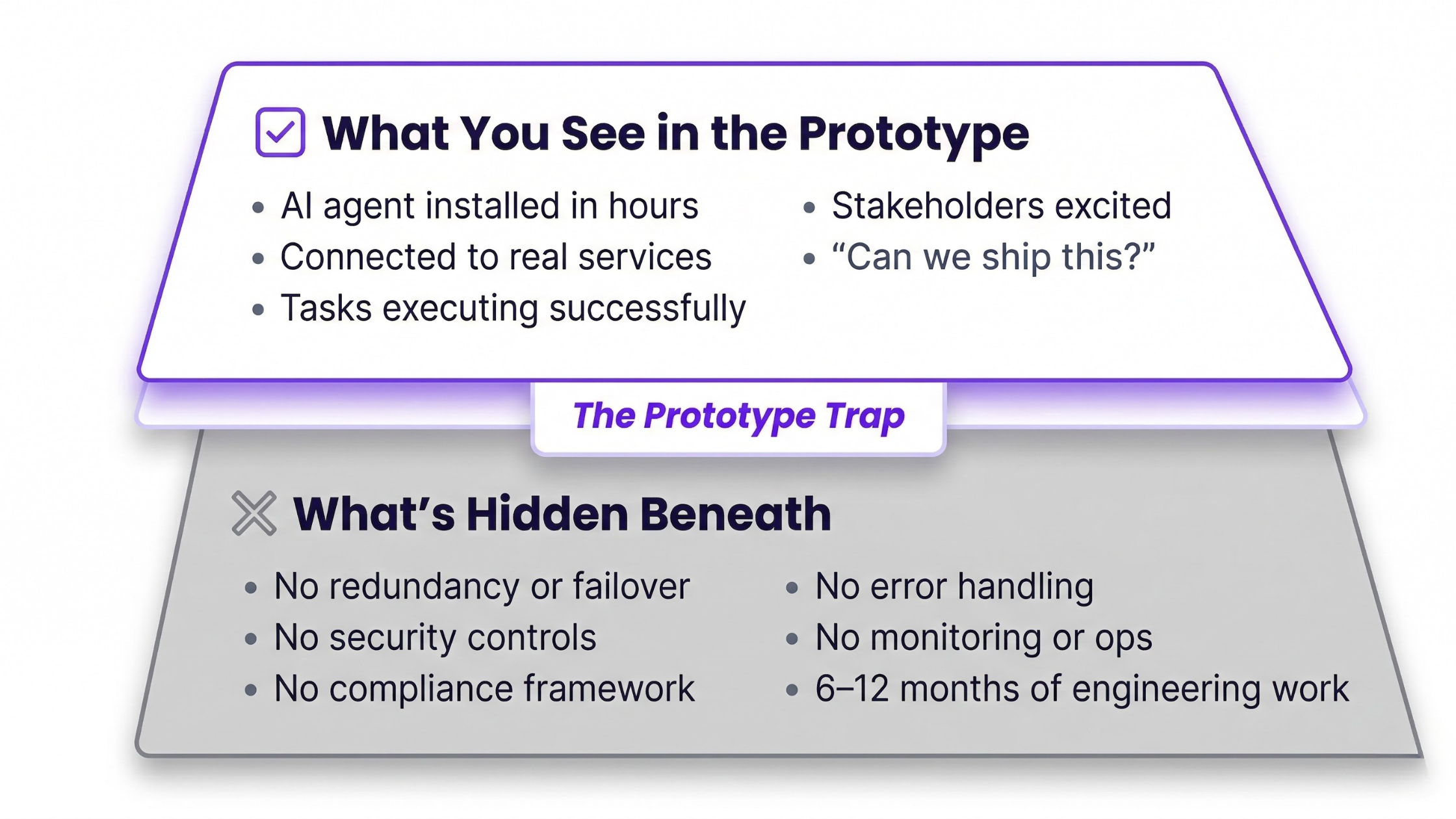
The Prototype Trap
OpenClaw makes it remarkably easy to build an impressive AI agent prototype. Install it on a machine, connect it to some services, and within hours you have an AI agent that handles real tasks. The demo is compelling. Stakeholders get excited. Someone inevitably asks: can we put this in production?
The answer reveals one of the most common and expensive traps in technology adoption. The distance between a working prototype and a production system is not a gap — it is a canyon. And the canyon is filled with engineering challenges that are invisible during the prototype phase.
Infrastructure: From Single Machine to Production Architecture
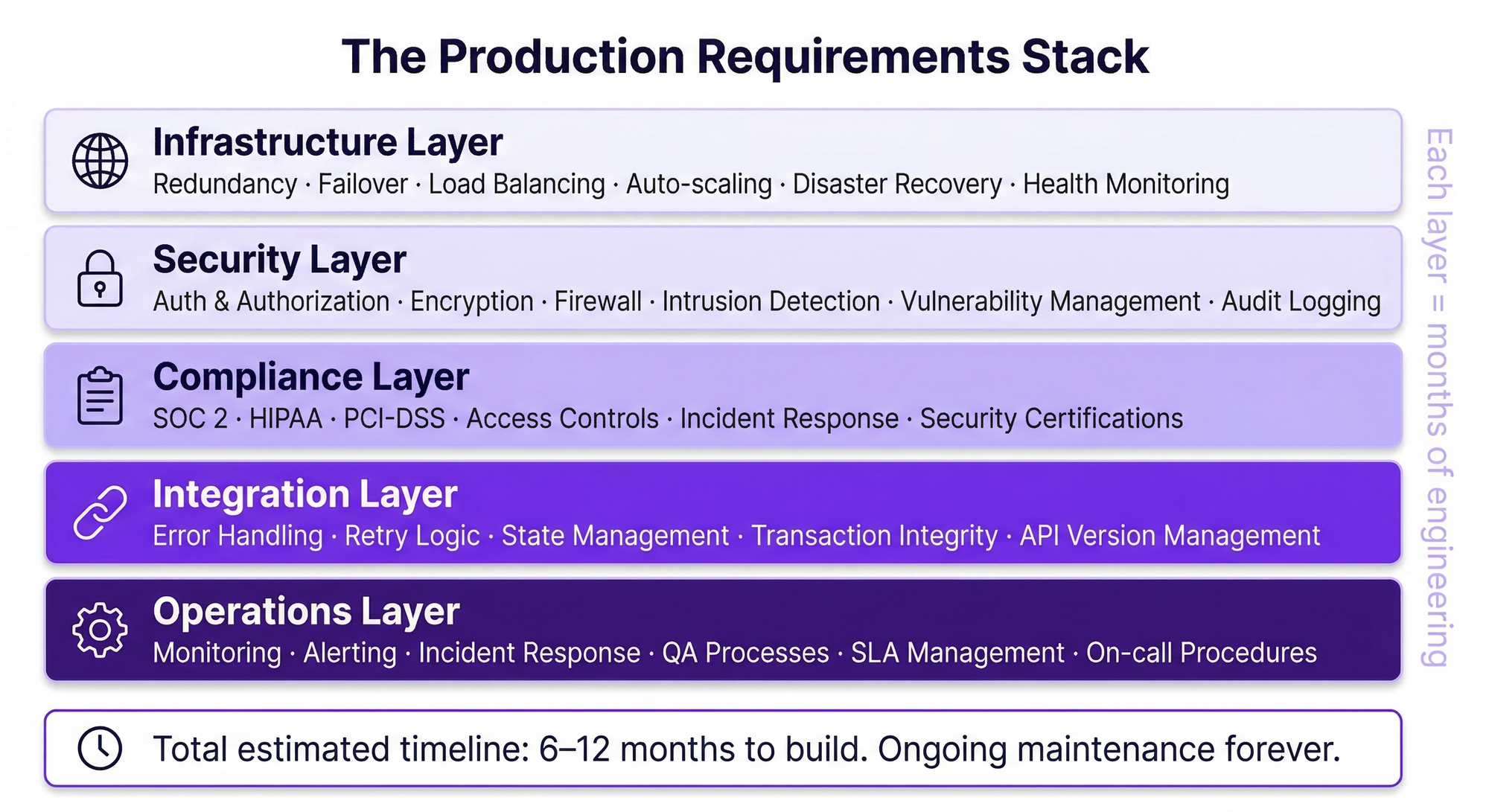
An OpenClaw prototype runs on a single machine. Production requires redundant infrastructure with automatic failover, load balancing across multiple instances, health monitoring and automated restart capabilities, backup and disaster recovery procedures, capacity planning and auto-scaling, and network architecture with proper segmentation and security zones.
Building this infrastructure from scratch around OpenClaw is a significant engineering project. You are essentially building a cloud platform to host and manage AI agent instances — a platform that enterprise AI agent vendors have spent years developing and refining.
Security: From Personal Trust to Enterprise Controls
A prototype operates on implicit trust. You trust your own machine, your own network, your own judgment about what the agent should access. Production requires explicit, documented, auditable security controls at every layer.
This includes authentication and authorization for every API connection, encryption of data at rest and in transit, network security including firewalls and intrusion detection, vulnerability management and regular security assessments, access logging and monitoring, incident response procedures, and security certifications if required by your industry or customers.
Each of these is a project in itself. Together, they represent months of security engineering that must be maintained and updated continuously as both the threat landscape and the OpenClaw codebase evolve.
Integration: From Quick Connections to Reliable Pipelines
OpenClaw's community skills provide quick integrations with various services. These work well for personal use where occasional failures are tolerable. Production integrations require comprehensive error handling and retry logic, state management across conversations and sessions, transaction integrity for actions that modify data, graceful degradation when external services are unavailable, monitoring and alerting for integration health, and version management as APIs and services change.
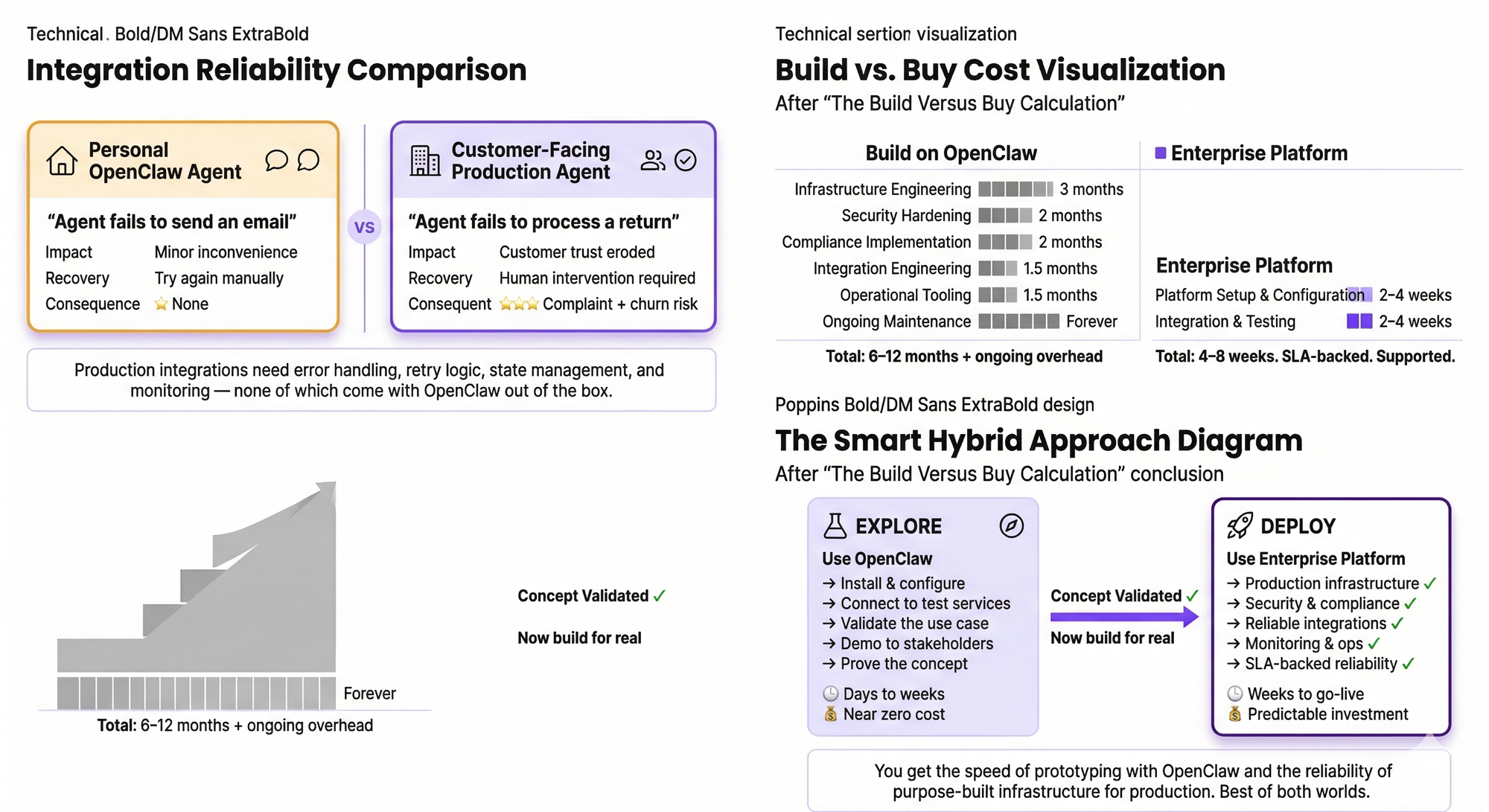
For customer-facing deployments, integration reliability directly impacts customer experience. A personal agent that fails to send an email is a minor inconvenience. A customer-facing agent that fails to process a return or update an account erodes trust and generates complaints.
The Build Versus Buy Calculation
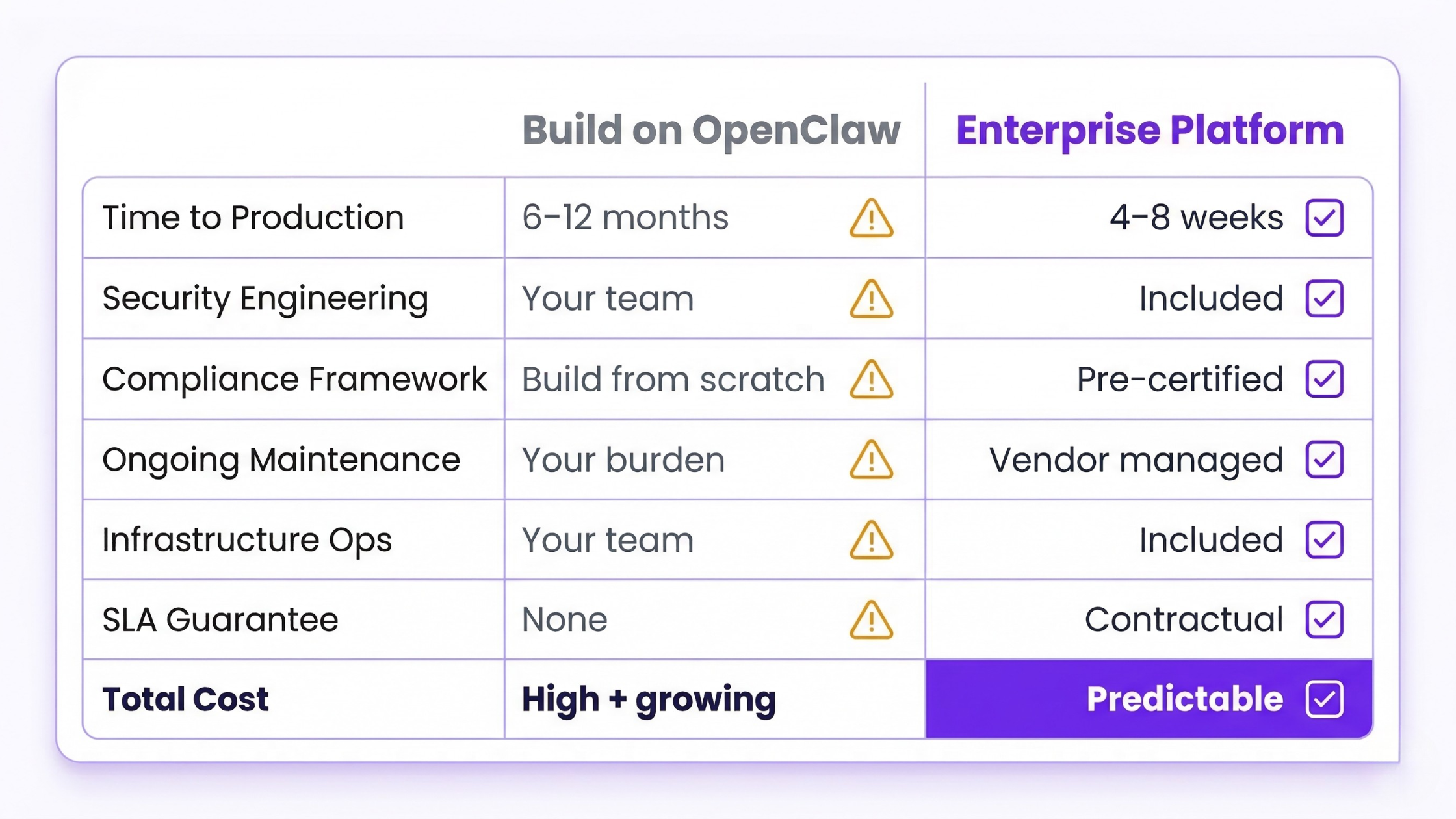
When organizations honestly assess what it takes to move from an OpenClaw prototype to production, the total cost of ownership calculation almost always favors an enterprise platform. The engineering time to build production infrastructure, the ongoing maintenance burden, the security and compliance investment, the operational overhead of managing a custom platform — these costs typically dwarf the license fees for a purpose-built enterprise AI agent platform.
Platforms like Anyreach have already solved these production challenges. They provide the infrastructure, security, compliance, integration reliability, and operational tooling that production deployment demands. What takes an internal team months to build is available immediately as a managed service, with SLA-backed reliability and professional support.
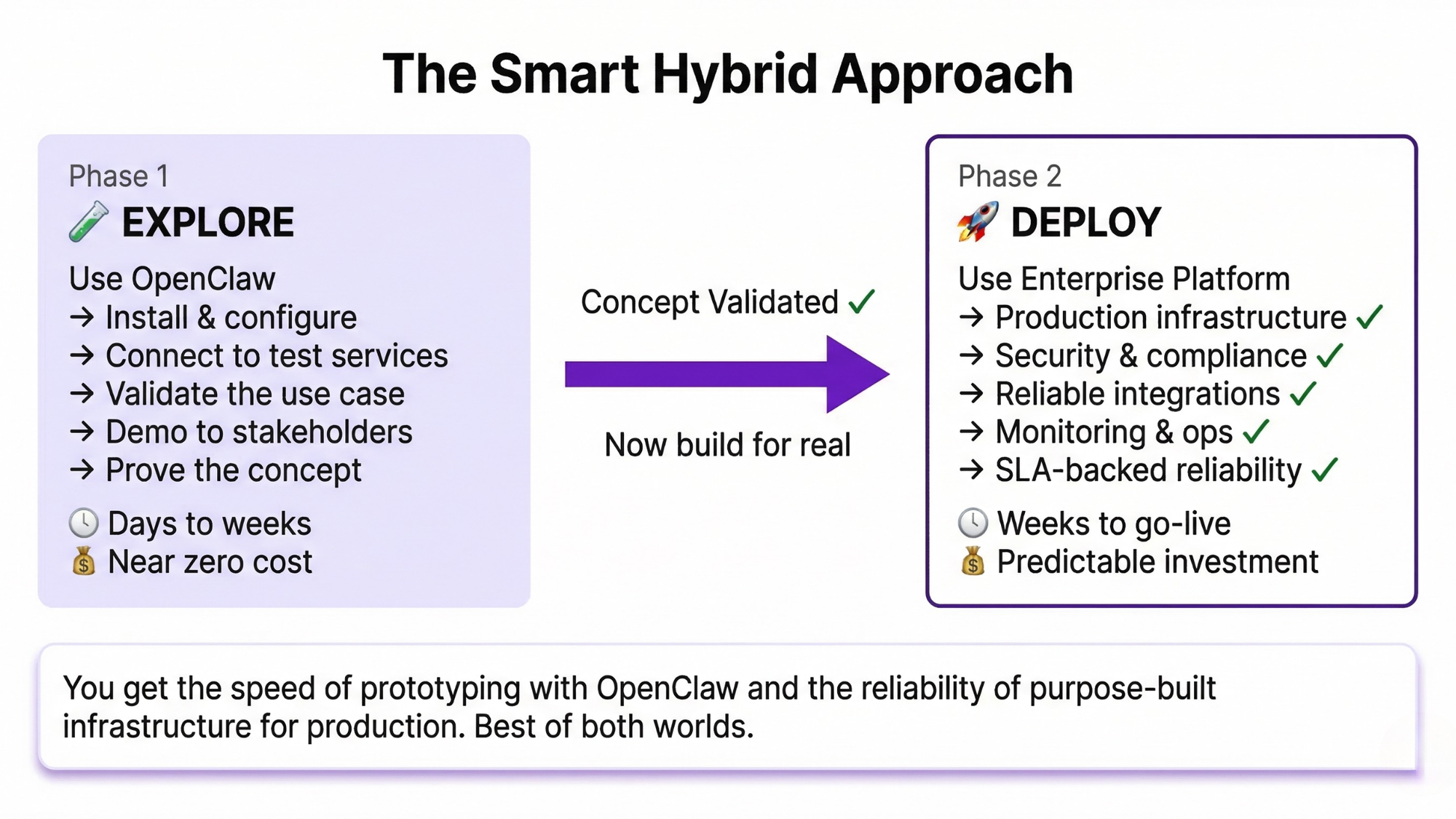
The smart approach is to use OpenClaw for what it excels at — rapid prototyping, concept validation, and understanding what AI agents can do — then deploy on an enterprise platform for production. You get the speed of prototyping with OpenClaw and the reliability of purpose-built infrastructure for production.
Frequently Asked Questions
Can OpenClaw be used in production?
While technically possible, moving OpenClaw from prototype to production requires significant engineering investment in infrastructure, security, compliance, and integration reliability that typically exceeds the cost of adopting an enterprise AI agent platform.
How long does it take to make OpenClaw production ready?
Building production-grade infrastructure around OpenClaw typically requires 6-12 months of engineering work for infrastructure, security hardening, compliance implementation, and operational tooling, plus ongoing maintenance.
What is the best approach for enterprises interested in OpenClaw?
Use OpenClaw for rapid prototyping and concept validation, then deploy on a purpose-built enterprise AI agent platform for production. This gives you the speed of exploration with the reliability and governance of managed infrastructure.
Ready for Enterprise-Grade AI Agents?
Anyreach delivers the agentic AI capabilities your organization needs with the security, compliance, and scalability enterprise operations demand. See how Anyreach can transform your customer and employee experience with AI agents that actually do things.
![[BPO Insights] Why Pre-Revenue Compliance Investment Has Become Table Stakes for Enterprise AI Vendors](/content/images/size/w600/2026/02/04_the_builders_log-20.png)
![[BPO Insights] Outcome-Based Pricing Models: How AI Economics Are Reshaping Enterprise CX Cost Structures](/content/images/size/w600/2026/02/03_the_uncomfortable_math-20.png)
![[OpenClaw] OpenClaw Has 180K GitHub Stars — Here's What That Means for Contact Centers](/content/images/size/w600/2026/02/Anyreach-Openclaw-Blog-Cover--4--8.png)
![[BPO Insights] "What If My Agents Find Out?" — The Fear Conversation Every BPO Leader Has Behind Closed Doors](/content/images/size/w600/2026/02/02_from_the_other_side-20.png)