
[OpenClaw] From BYOD to BYOA: Why Enterprises Need an AI Agent Strategy Before Employees Build Their Own
The shift from BYOD to BYOA (Bring Your Own Agent) is happening fast. Learn why enterprises need an AI agent strategy now and how to get ahead of unsanctioned adoption.

![[OpenClaw] From BYOD to BYOA: Why Enterprises Need an AI Agent Strategy Before Employees Build Their Own](/content/images/size/w1200/2026/02/Anyreach-Openclaw-Blog-Cover--4--4.png)
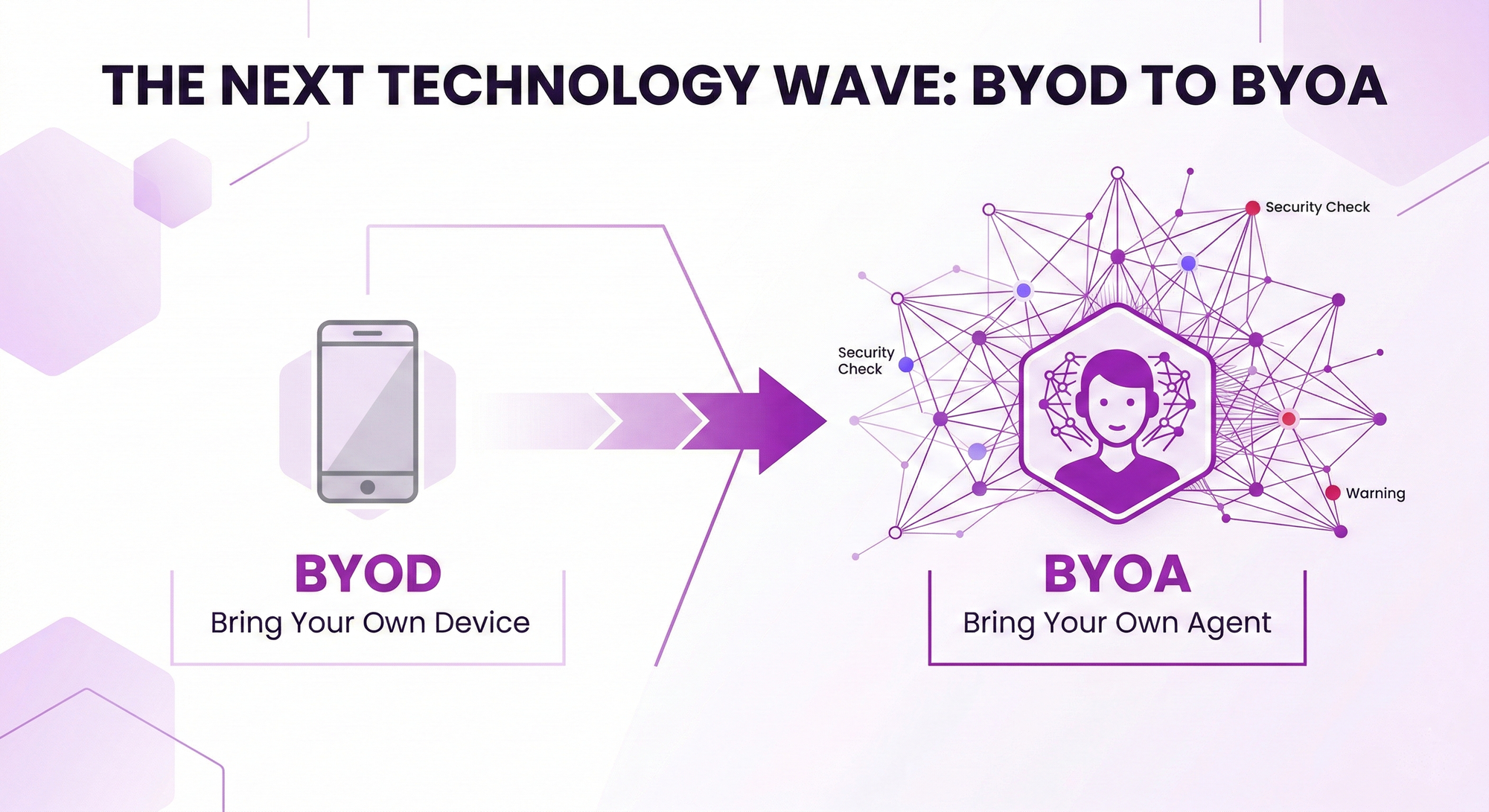
The Predictable Cycle of Enterprise Technology Adoption
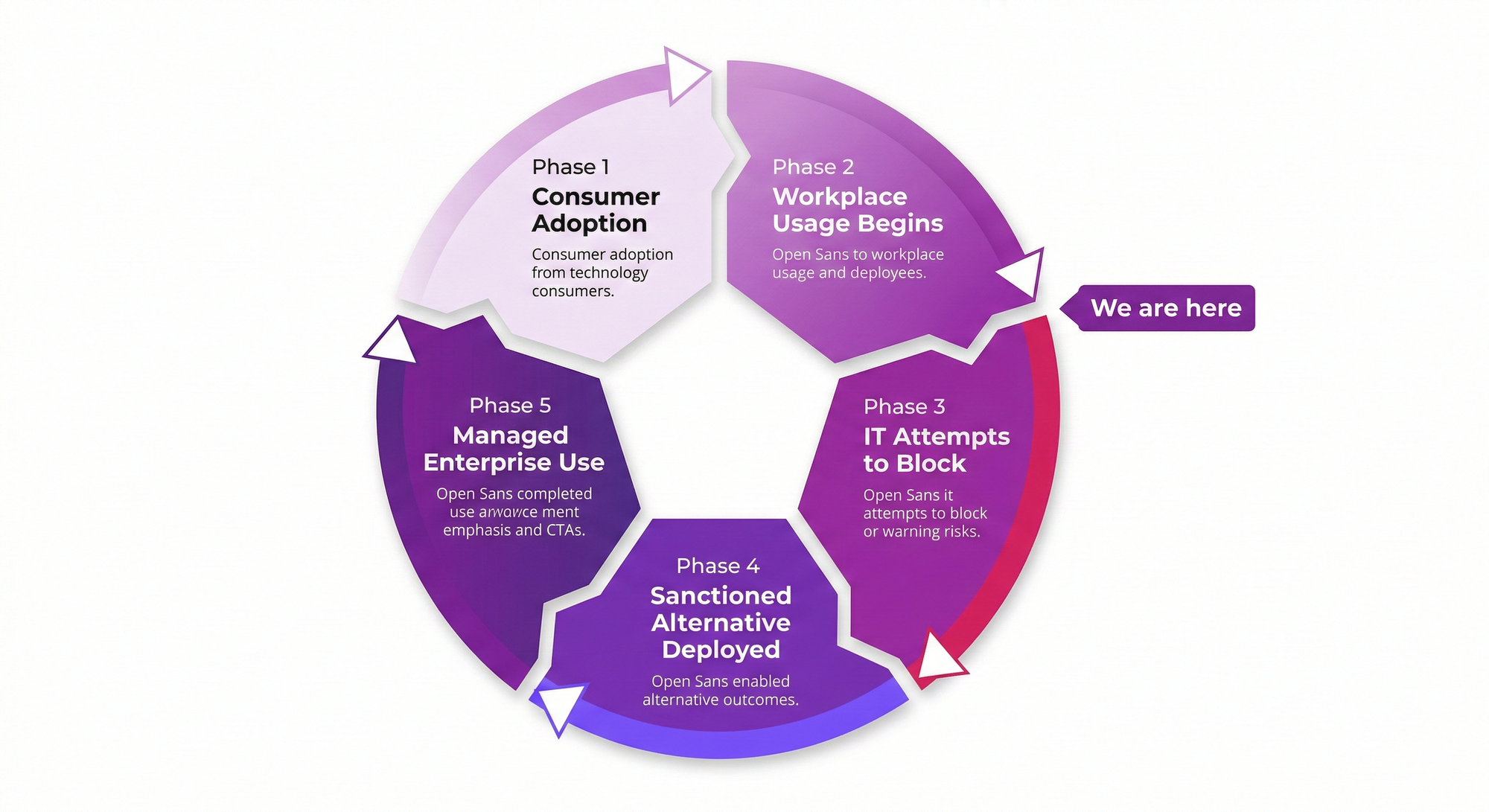
Enterprise technology adoption follows a remarkably consistent pattern. A consumer technology emerges that makes people dramatically more productive. Early adopters bring it to work. IT departments initially ignore it, then try to ban it, then eventually provide a sanctioned alternative. The cycle played out with personal computers in the 1980s, smartphones in the 2000s, cloud storage in the 2010s, and generative AI in 2023.
We are now entering the same cycle with personal AI agents, but the timeline is compressed and the stakes are higher. OpenClaw went from zero to 180,000 GitHub stars in weeks. The productivity gains from having an always-on AI assistant that actually takes action are so compelling that adoption is outpacing anything we saw with previous technology waves.
Why the Agent Cycle Is More Dangerous Than the Device Cycle
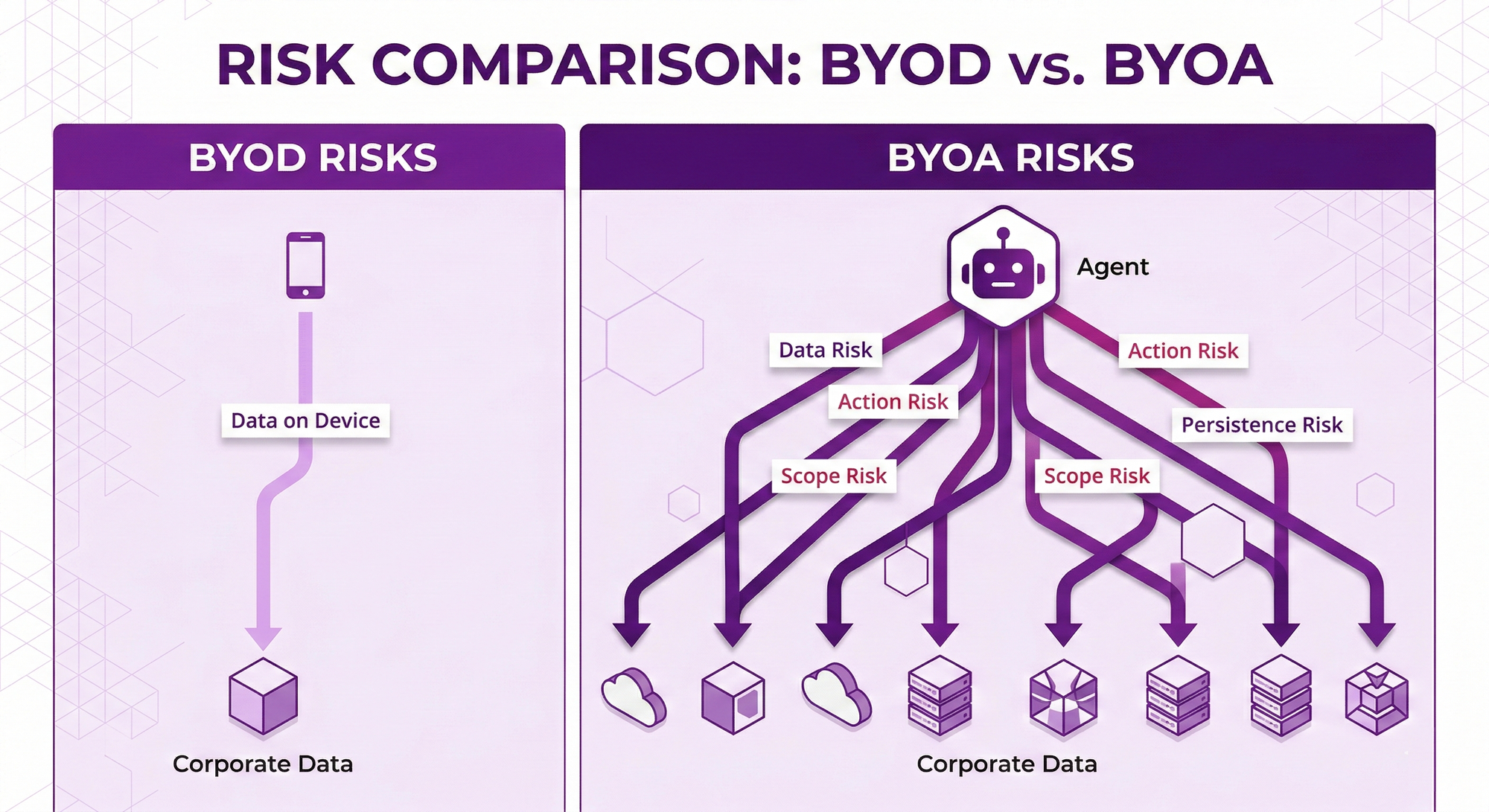
When employees brought personal phones to work, the risk was primarily data on devices. When they brought cloud storage, the risk was data in unauthorized locations. Both could be addressed with relatively straightforward policies and technical controls.
Personal AI agents compound these risks and add entirely new dimensions. Data risk still exists — corporate information flows to personal infrastructure. But agents also introduce action risk, where the AI can send communications, modify records, and execute tasks autonomously. They introduce persistence risk, as agents operate around the clock without requiring human initiation for each action. And they introduce scope risk, because a single agent can be connected to dozens of corporate systems simultaneously, amplifying the impact of any breach or misconfiguration.
The BYOD era taught us that reactive policies fail. By the time an organization discovers the extent of personal device usage and develops a response, the behavior is deeply entrenched. The BYOA era demands proactive strategy.
Building an Enterprise AI Agent Strategy
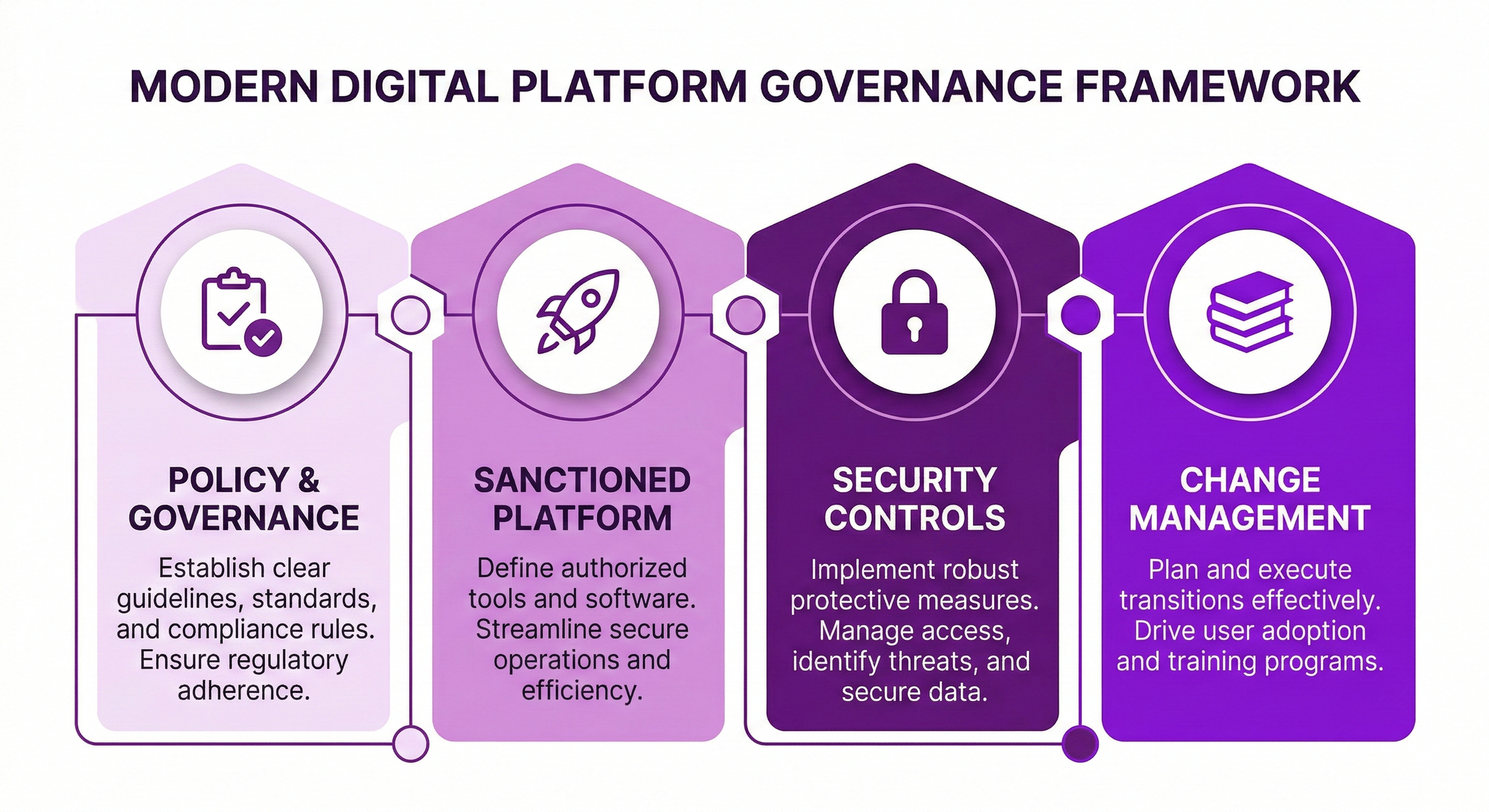
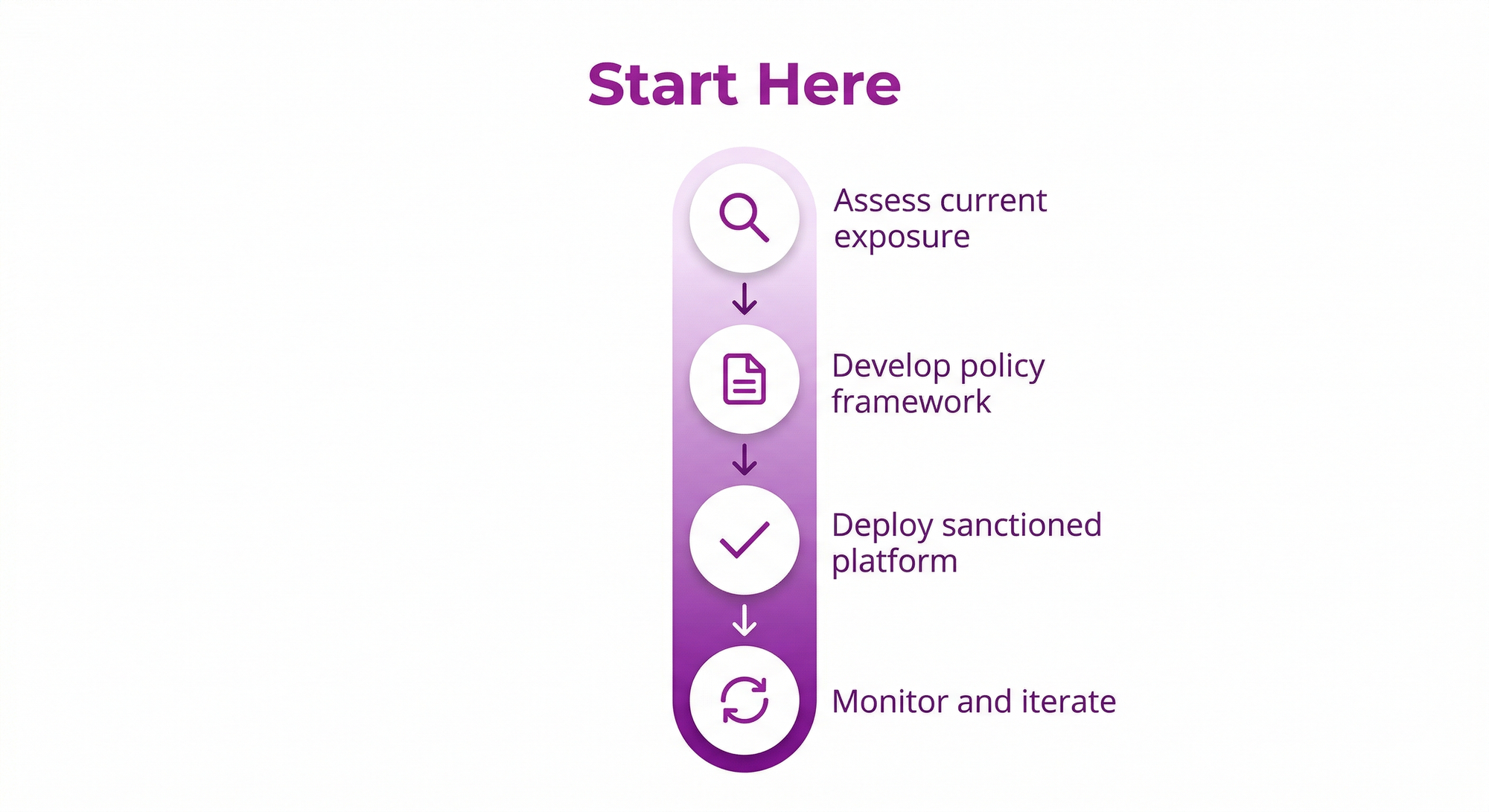
An effective AI agent strategy addresses four dimensions. First, policy and governance: defining what AI agent usage is acceptable, what data AI agents can access, and what actions they can take. These policies need to be practical and enforceable, not aspirational documents that employees ignore because they are incompatible with how work actually gets done.
Second, sanctioned platform deployment: providing employees and teams with enterprise-grade AI agent capabilities that satisfy the legitimate demand driving personal agent adoption. This is the most critical element. Without a sanctioned alternative, policies alone will not prevent unsanctioned usage.
Third, security controls: implementing technical safeguards including API token management, access monitoring, data loss prevention for AI agent interactions, and incident response procedures specific to AI agent-related events.
Fourth, change management: educating employees about the risks of unsanctioned AI agents while demonstrating that the enterprise platform provides equal or better capabilities. This requires genuine investment in the sanctioned platform, not a checkbox deployment that employees immediately recognize as inferior to what they can build themselves.
The Sanctioned Platform Imperative
The cornerstone of any enterprise AI agent strategy is providing a platform that employees actually want to use. This is where many organizations will fail. They will deploy a limited, restricted AI tool and wonder why employees continue using OpenClaw on the side.
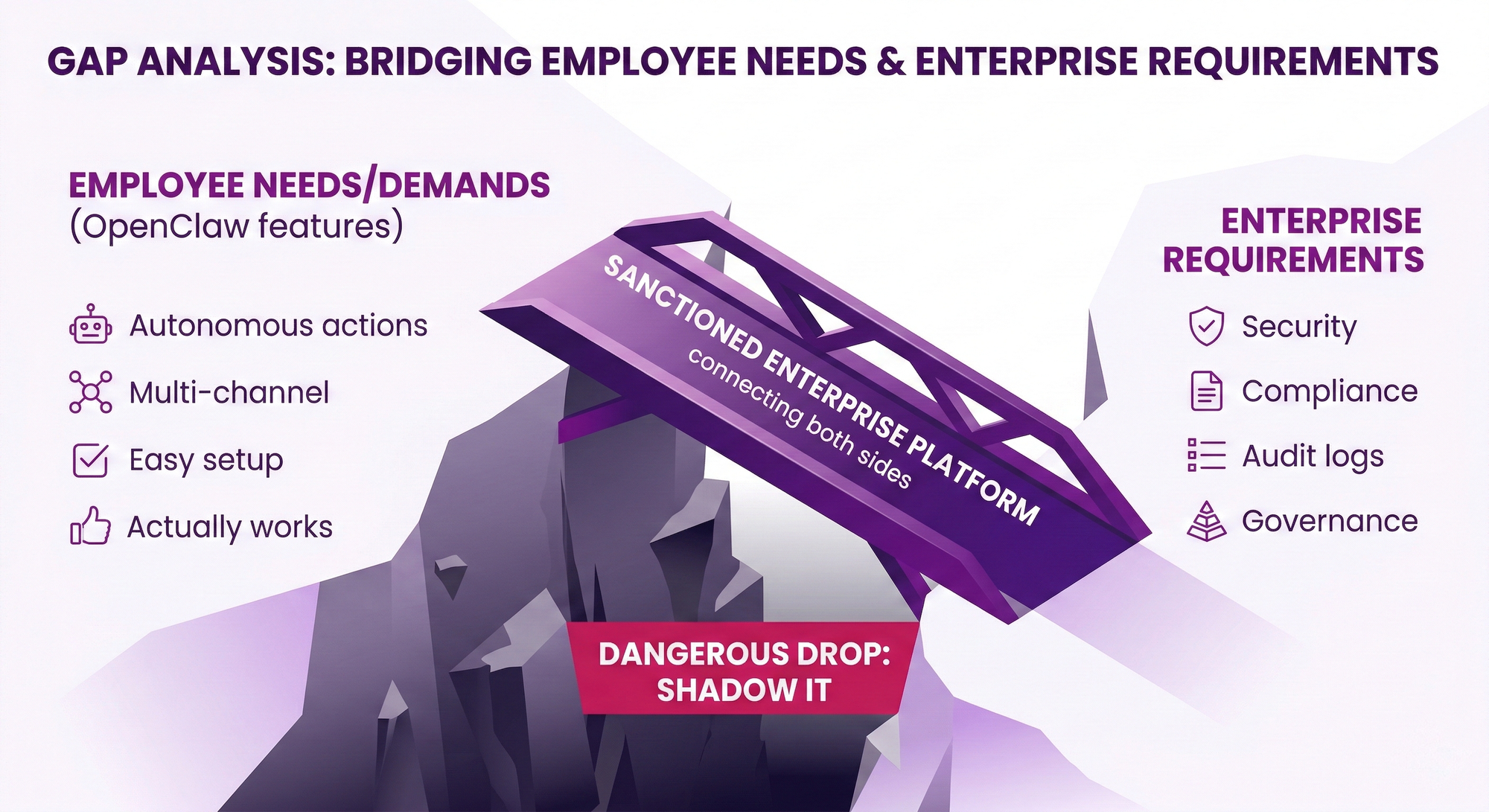
A sanctioned platform must deliver genuine autonomous capabilities. It needs to work across the communication channels employees use — voice, chat, email, SMS, and messaging platforms. It needs to take real actions, not just generate text. And it needs to be easy to use, not requiring weeks of configuration.
Platforms like Anyreach are designed for exactly this requirement. They deliver enterprise-grade AI agents that operate across omnichannel communication — handling customer interactions, automating workflows, and taking actions — all within a managed, compliant, and secure environment. When the sanctioned platform genuinely matches or exceeds what personal agents can do, adoption follows naturally and the shadow AI agent problem solves itself.
Frequently Asked Questions
What is BYOA?
BYOA stands for Bring Your Own Agent, referring to the trend of employees using personal AI agent platforms like OpenClaw for work tasks without organizational approval. It follows the same pattern as BYOD (Bring Your Own Device) but carries greater risk due to autonomous action-taking capabilities.
How quickly do enterprises need to develop an AI agent strategy?
Immediately. OpenClaw's viral adoption means employees in most organizations are already exploring or using personal AI agents for work. Every week without a strategy increases the organization's unmanaged security and compliance exposure.
What should an enterprise AI agent strategy include?
An effective strategy addresses four areas: governance policies defining acceptable use, a sanctioned enterprise AI agent platform, technical security controls for monitoring and access management, and change management to drive adoption of the sanctioned platform.
Ready for Enterprise-Grade AI Agents?
Anyreach delivers the agentic AI capabilities your organization needs with the security, compliance, and scalability enterprise operations demand. See how Anyreach can transform your customer and employee experience with AI agents that actually do things.
![[BPO Insights] The Compliance Paradox: How SOC 2 Went From BPO Annoyance to the #1 Structural Moat in AI-Powered CX](/content/images/size/w600/2026/02/02_from_the_other_side-18.png)
![[BPO Insights] The Invisible Blocker: Why BPO AI Deals Die in Middle Management, Not in the C-Suite](/content/images/size/w600/2026/02/01_cx_intelligence_drop-19.png)
![[BPO Insights] The BPO Use Case Nobody Is Talking About: Why Real-Time AI Translation Will Be a Bigger Market Than Full Voice Automation](/content/images/size/w600/2026/02/05_the_2028_thesis-10.png)
![[OpenClaw] Is OpenClaw Secure Enough for Customer Data? What Enterprises Need to Know](/content/images/size/w600/2026/02/Anyreach-Openclaw-Blog-Cover--4--3.png)